
November 2025 Newsletter
Giving Thanks
The Community Food Council is very grateful to be able to work with and support the amazing people of Del Norte and Tribal Lands. The events of this month gave us a glimpse of the power and effectiveness we have when we come together with respect, cooperation, and collaboration.
North Coast Emergency Food System Partnership
Emergency Feeding Task Force SNAP CalFresh Disruption Response: Summary & Community Update
The Del Norte Emergency Feeding Task Force (EFTF) was activated for 17 days in response to the disruption of November SNAP/CalFresh benefits. Throughout the activation, partners across the county and tribal lands worked together to support residents facing delays, uncertainty, and limited access to food resources.
History of the Del Norte Emergency Feeding Task Force
The Del Norte Emergency Feeding Task Force was created in 2024 as part of the Del Norte & Tribal Lands Community Food Council’s USDA Regional Food System Partnership Grant. The goal was to build a coordinated, countywide system and network to ensure that all residents have access to food during emergencies—whether caused by natural disasters, power outages, economic disruptions, or other crises.
Over the past year, the EFTF has:
Created the Del Norte Multi-Agency Disaster Feeding Plan (MADFP) to outline roles, responsibilities, and coordinated strategies during food-access disruptions.
Established shared communication systems, including protocols for public updates, resource listings, and cross-agency coordination.
Brought together a multi-sector network, including tribal partners, DNUSD Nutrition Services, FRC Food Bank, DHHS divisions, Del Norte OES, Senior Center, CERT, and numerous community organizations.
Conducted regular meetings preparing partners to activate quickly and effectively when real disruptions occur.
This year’s SNAP/CalFresh disruption was the first full activation of the Task Force—demonstrating the value of proactive planning and strong partnerships across the region.
Community Response Highlights
During the activation, food access organizations significantly scaled operations:
FRC Food Bank served over 380 households (1,050 individuals) in the first week—more than half their usual monthly total—with 50 first-time households. They extended their hours, added additional Saturday distributions throughout November, and prepared holiday food boxes. They also launched a community Food Drive with donation barrels placed at several local businesses and community gathering spaces.
Mission Possible distributed an increased number of food bags and sought donations of shelf-stable, ready-to-eat foods.
DNUSD Nutrition Services coordinated Thanksgiving Break meal bag distribution across multiple locations, providing five days of breakfasts and lunches to youth countywide.
Yurok Tribe distributed $300 emergency gift cards to tribal members receiving SNAP benefits.
Tolowa Dee-ni’ Nation supported citizens with grocery gift cards and resource coordination.
Senior Center continued weekday senior lunches and saw growing demand, especially among the 1,400 local seniors who rely on SNAP.
Del Norte OES opened a Food Resources Hotline (707-464-0915) to connect residents with food distributions and volunteer opportunities.
Strengthening Food Access & Coordination
The Del Norte & Tribal Lands Community Food Council supported the activation by:
Facilitating the EFTF
Publishing a weekly food distribution calendar
Maintaining updated listings of expanded and regular distribution hours
Translating the Food Resources Guide into Spanish
Reaching out to the Hmong community to organize culturally relevant food box distribution.
Working with the Del Norte Solid Waste Management Authority and local grocery retailers to strengthen food rescue systems
Partners across the EFTF—including DHHS divisions, tribal nations, DNUSD, FRC, OES, Mission Possible, Senior Center, CERT, and numerous community groups—worked in close coordination throughout the activation to align response strategies and share resources quickly.
Funding Support
The Humboldt Area Foundation/Wild Rivers Community Foundation expedited flexible grants to sustain expanded food distribution and meal programs during the activation. Additional funding from the Del Norte Health Care District supported the FRC Food Bank in purchasing additional food to meet higher-than-normal demand, and assisted DNUSD in distributing five days of breakfasts and lunches during the Thanksgiving break.
A Mighty Cause fundraiser also raised over $12,000 for the FRC Food Bank—reflecting tremendous community generosity and support.
Looking Forward
With the 17-day activation complete, the EFTF will continue meeting regularly to:
Review lessons learned
Strengthen emergency feeding strategies
Maintain readiness for future disruptions
Complete a full After-Action Report, reflecting on what worked well and where improvements can be made
Stay Tuned!
As part of closing out this activation, we will be putting together an Emergency Feeding Response Feedback Survey, and sending it out as a separate newsletter.
This feedback will directly inform our After-Action Report and ongoing planning for a more resilient, coordinated emergency feeding system.
Need Support or Want to Get Involved?
Call the Food Access Hotline: (707) 464-0915 (available through the holidays)
Visit www.dnatlfoodcouncil.org for updated schedules and resources
Email iya@dnatlfoodcouncil.org to share updates or request support
The Emergency Feeding Task Force remains committed to ensuring that no one in Del Norte County goes hungry—during emergencies and every day.
Community Dinners
On Thursday, November 20th, 5:30-7:30 p.m. the Yurok Tribe welcomes the community For a Fall Feast at the Klamath Tribal Office
And on Thanksgiving, the Crescent City Community Thanksgiving Dinner will be held at the Del Norte County Fairgrounds
Sign-up to Volunteer here
Donate Financially here
Email: thanksgiving@ccfoursquare.org
DNUSD Thanksgiving Break Meal Schedule
In support of our local children and families, we have secured funding to be able to provide meals to children and youth over the week of Thanksgiving break. We know that the cost of food for a household with children is often impacted when they are out of school. To help offset that additional expense, we will be coordinating distribution of meal bags across the county. In order to accomplish this, we are partnering with some of our Summer Meals community partners.
Meal bags will include 5 days of breakfast meals and 5 days of lunch meals. Please reach out to Nutrition Services if you have questions. You can call 464-0246, email ns.dept@dnusd.org
Check out the website: DNUSD Food Service
School Gardens
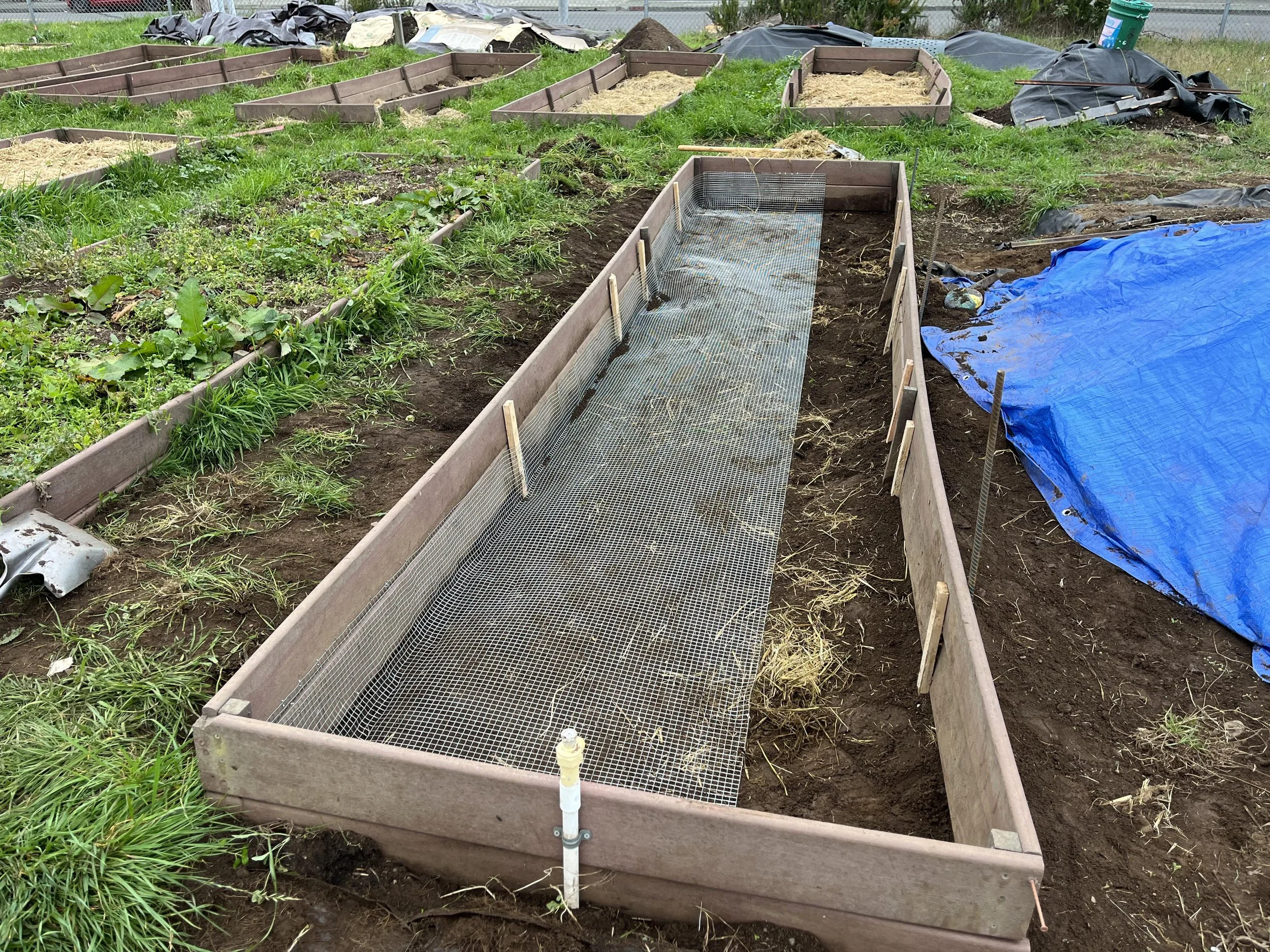
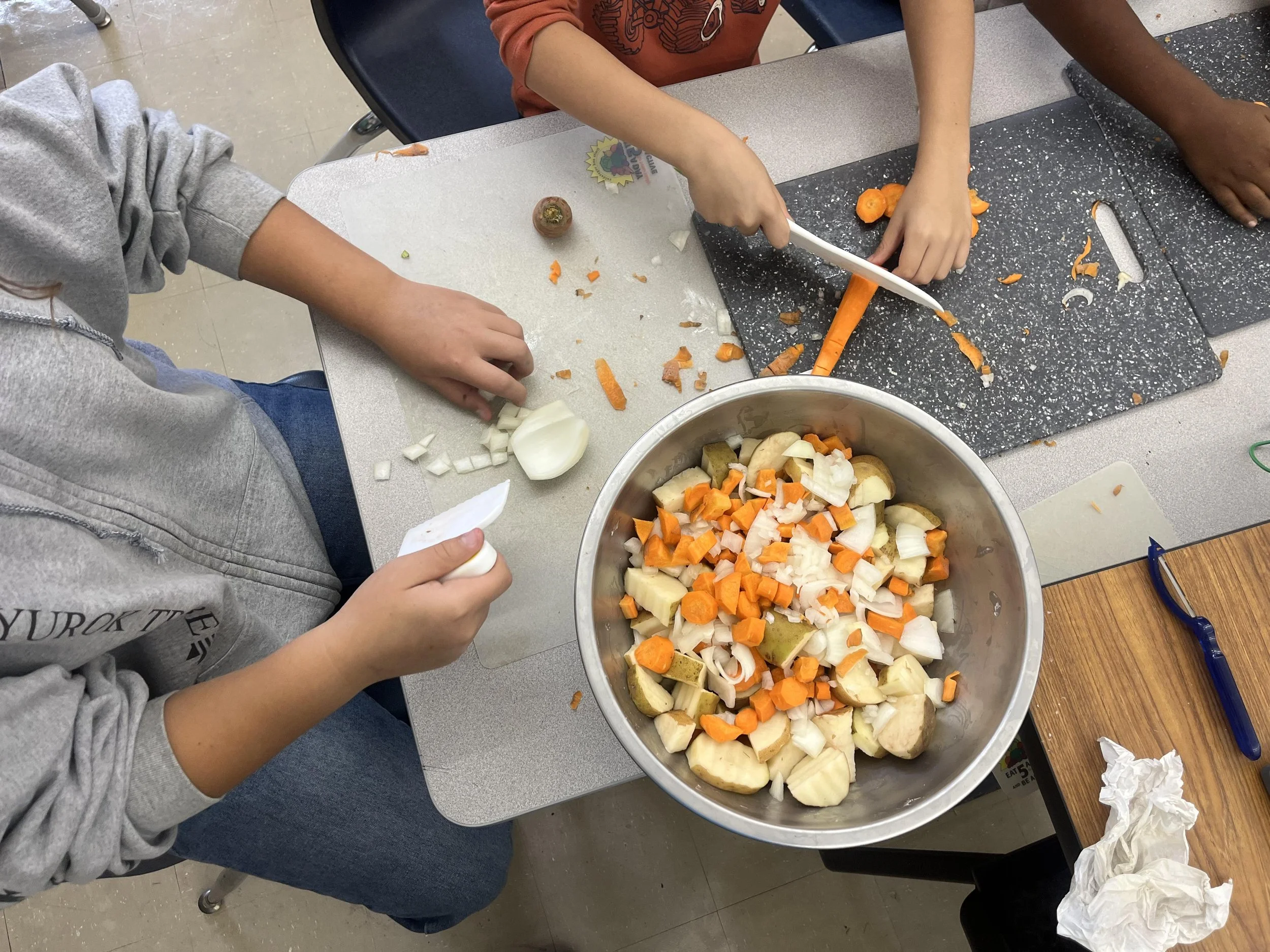
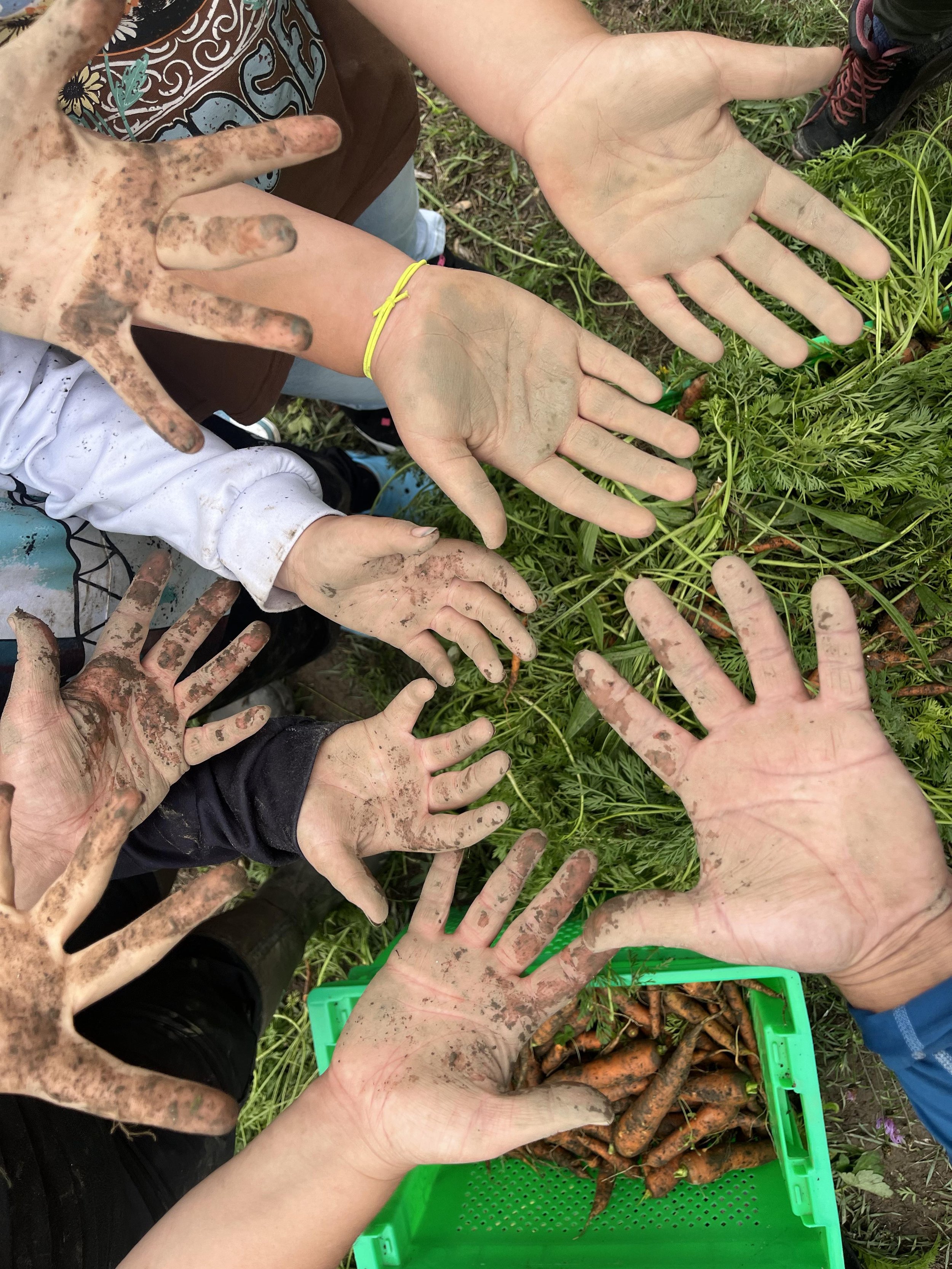
We’ve been busy building! If you don’t see many plants in our school gardens right now, it’s because we’re deep in construction mode—repairing, rebuilding, harvesting what summer left behind, and cooking with students. Our program now includes seven schools:
‘O Me-Nok Learning Center, Joe Hamilton Elementary School, Crescent Elk Middle School, Bess Maxwell Elementary School, Pine Grove Elementary School, Sunset High School, and Smith River Elementary School
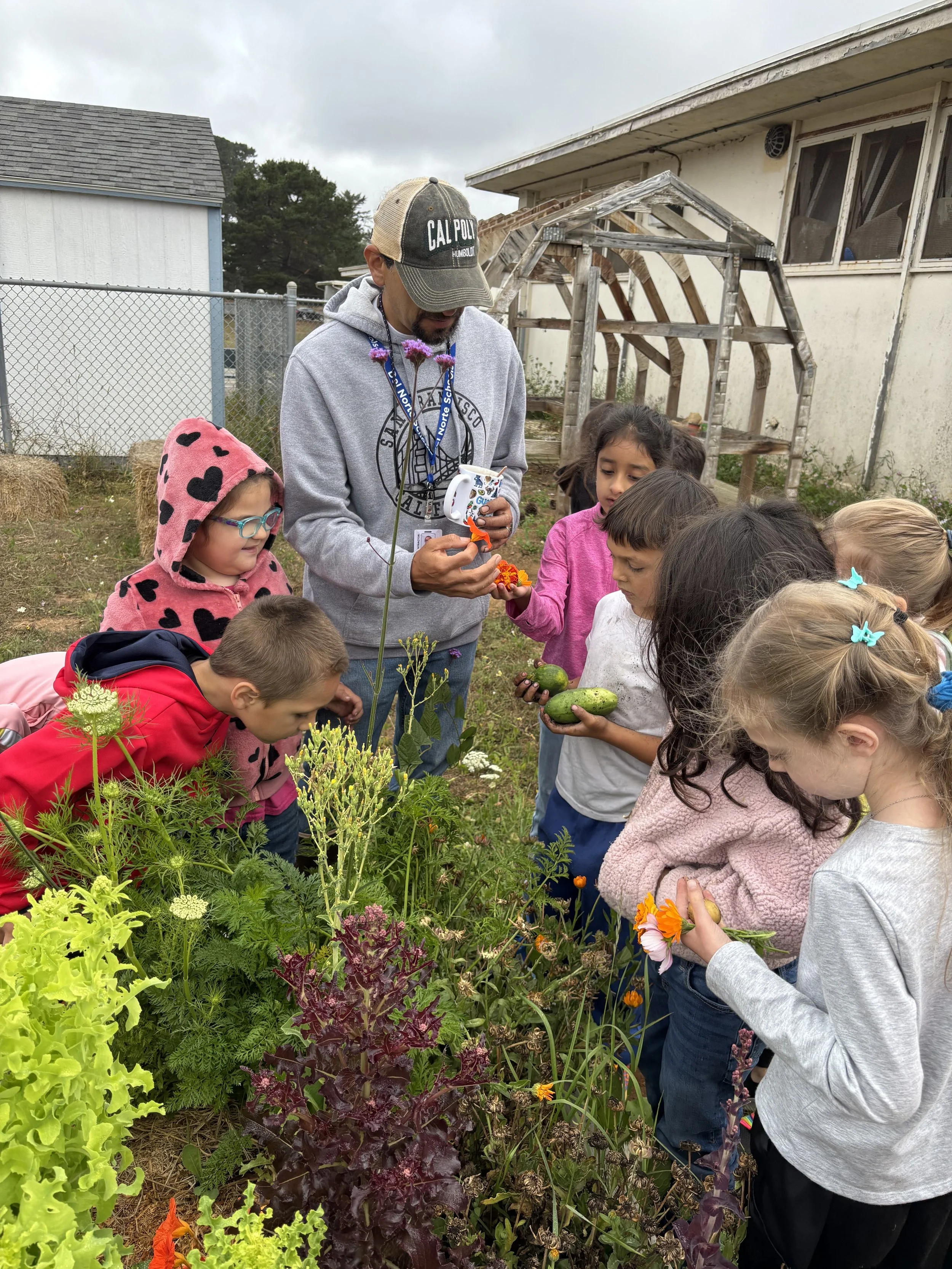
Our School Garden Coordinators, Hailei Markgraf and Walter Campos, along with Farm to School Program Manager Melanie Cross, have been busy supporting each school. They’re teaching alongside classroom teachers so that, by next year, teachers can carry these lessons forward independently.
While we teach, we’re also rebuilding the physical spaces—sometimes completely tearing gardens apart to make them functional again. Even the gophers seem confused by all the activity! All this effort is preparing us for spring, when we’ll plant the next generation of food for our cafeterias. Our vision: students growing delicious, abundant food to serve in schools across the county.
After two years of planning, we’re finally raising a hoop house at ‘O Me-Nok Learning Center! Thanks to partnerships with The Yurok Tribe Environmental Department, Seabreeze Farms, the Yurok Tribe Watershed, and the Klamath Promise Neighborhood Director, we’ve been pounding, digging, cementing, and assembling a 30’ x 48’ structure where Klamath students will soon grow more food than ever.
Other exciting updates:
Pine Grove received 12 new Vego Garden Beds to bring their school garden back to life.
At Joe Hamilton, we’re exploring plans for a new greenhouse in collaboration with our amazing School District.
Crescent Elk is getting a complete garden bed overhaul—we’re removing tons of soil to gopher-proof the space.
Smith River will soon have a new irrigation system.
Bess Maxwell is getting new greenhouse panels.
And at Sunset High, we’re helping the Ag teacher launch their own food production program.
We truly cannot wait to see these projects completed. We’d love more helping hands—so if any of this inspires you, please don’t hesitate.
Contact us!
If you’d like to be part of these wonderful projects, email melanie@dnatlfoodcouncil.org or reach out at your school.
Taa-’at-dvn Chee-ne’Tetlh-tvm’- Crescent City Food Forest
Compost Success! The day after Harvest Festival, food forest volunteer, Jacob McAdams, and Food Forest Coordinator Assistant, Amber McAdams, repurposed the bales used during the festival and started a straw bale bin composting system. This new composing system inspired the interest and excitement that led to a composting demonstration.
The demo brought 15 community members of all ages (from babies to elders) into the food forest to learn about composting. It was six weeks into our composting journey, and we were thrilled to showcase our very first completed compost pile.
Spread out on a tarp beside the composting area, the finished compost caught everyone’s attention. Visitors scooped it up, examined it closely, and asked thoughtful questions. The space worked beautifully for explaining how composting strengthens our community, the basics of how it works, and methods people can implement at home. We demonstrated our tumbling composter and bucket-style worm bin, and—with help from volunteer Jacob—showed how to build a hot compost pile for faster results.
One participant summed it up perfectly: “I’m glad I came—I learned so much.”
Training Ground
A Transition Partnership Program (TPP) student had her first two work days of the school year at the food forest. She participated in the 2025 summer TPP program at the food forest and chose to use all 93 of her TPP hours for this school year at the food forest. TPP is a paid program. The student plans to pursue a career working with plants in her future and sees the food forest as a job training opportunity.
Teaching Moments
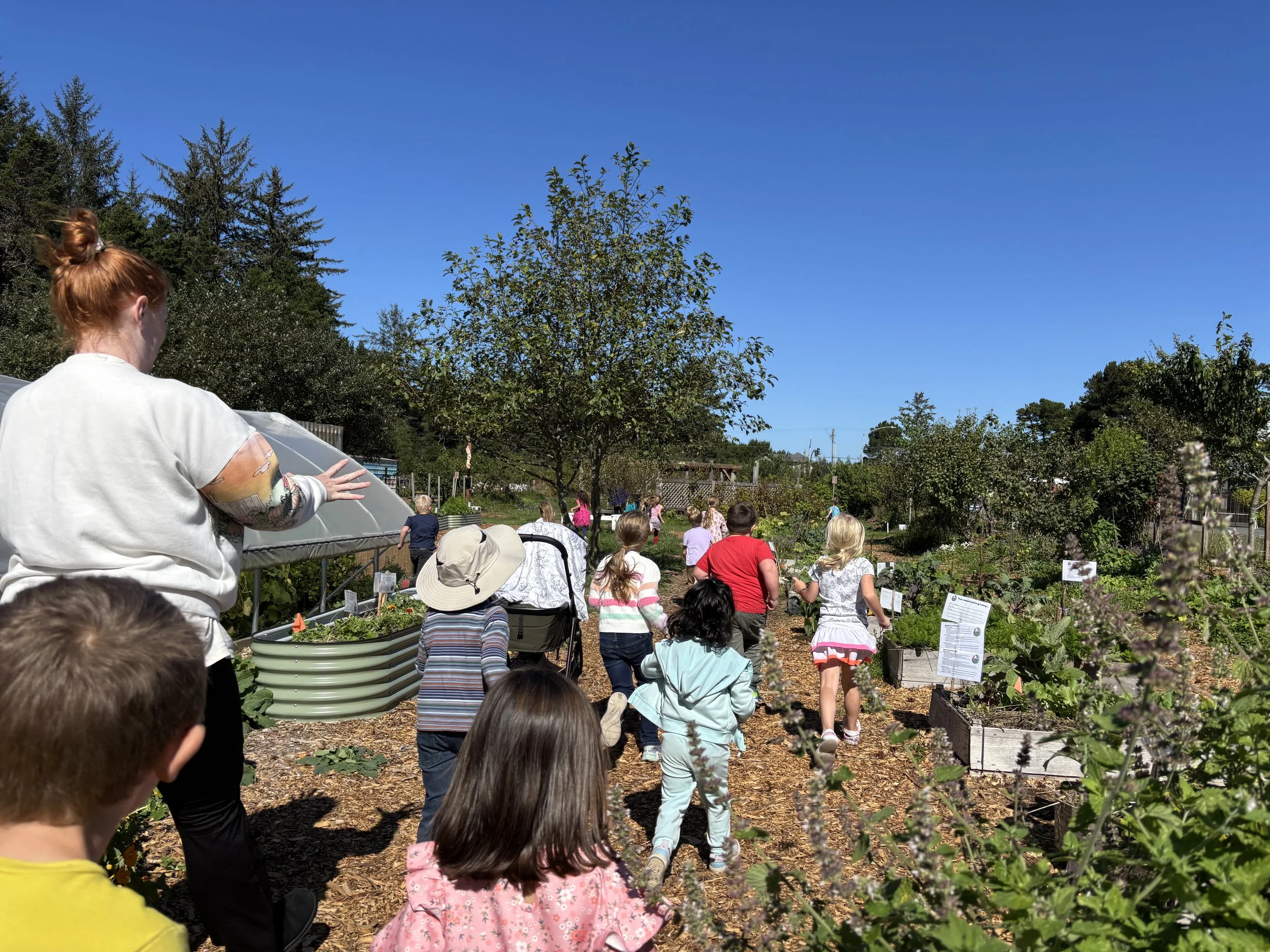
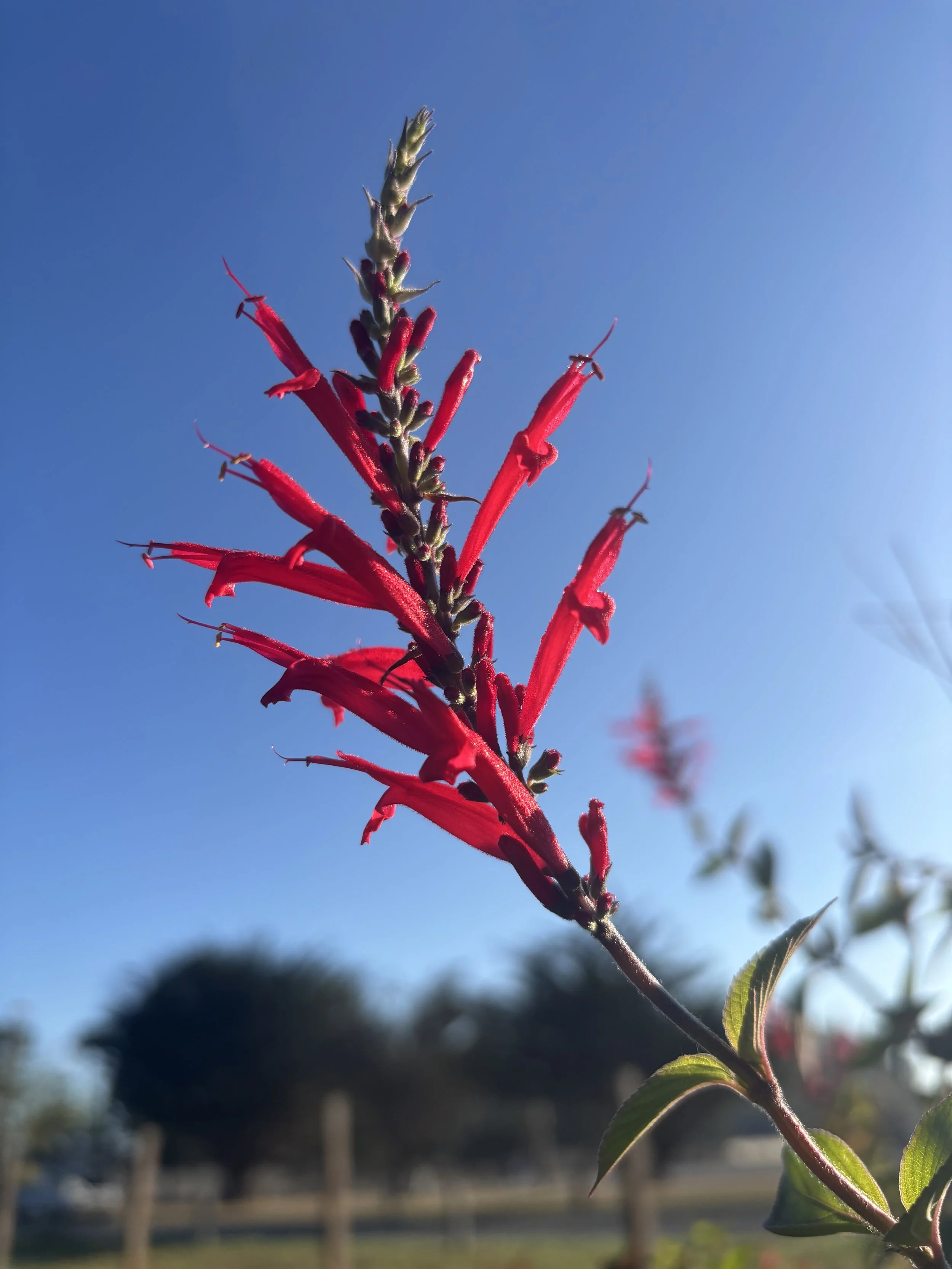
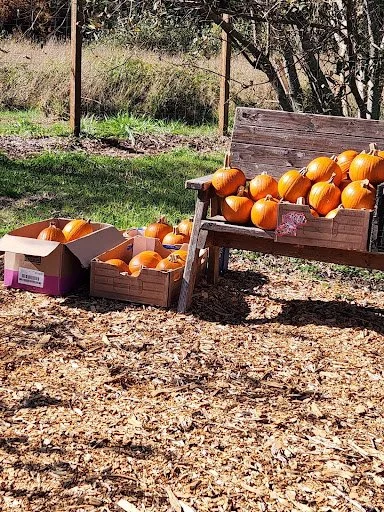
Uncharted Shores kindergarten and TK classes had a field trip in our beautiful food forest that was a great success. The kiddos were very excited to visit. When all the excitement for exploring the space and the thrill of hiding and finding their pumpkins subsided, the opportunity arose to learn about what the food forest has to offer. Parents, staff and caregivers were able to stroll around and take little taste testers of the different foods that were available to harvest. The signage posted around these plants made it easier to host such a large group at one time (thank you Kassandra). In these moments I was able to invite these families back and welcome them to join us in our future endeavors. It was a highlight of my day when I overheard moments of a parent asking their child, “Where do you think we can find lettuce?” and proceed to look until they come upon it. Another highlight was introducing ground cherries to those that have never heard of them before
Climate Resilient Farmer Rancher Training
Applications deadline extended through November 30th
You still have time to apply!
Join a no-cost, 15-month training program in climate-adaptive crop and livestock production, production planning, business skills, and business plan development.
Participants will learn through in-field and classroom instruction with experienced local farmers across multiple sites. You can choose a paid internship for hands-on experience or a mentorship pairing to support work on your own site.
This program is ideal for those who want to manage or own a farm in the coming years or take a lead role in a food sovereignty garden. Space will prioritize historically underserved farmers and ranchers as defined by USDA, and the program is committed to diversity, equity, and inclusion.
Locations:
Workshops and hands-on learning will take place at farm and community garden sites throughout Humboldt and Del Norte Counties, rotating to provide experience with diverse production practices. Classroom sessions will be held at the NCGA Harvest Hub in Arcata, the Humboldt County Agricultural Center in Eureka, and the Innovation Hub in Arcata.Timeline:
The program runs January 2026 – March 2027 and covers production practices tailored to our region’s unique climate, geography, and markets, including vegetables, tree fruits, wine grapes, beef, dairy, quinoa, and dry beans.
Please read through all the program information before applying.
Pacific Pantry & Mobile Market
Please Continue to Support the Pacific Pantry & Mobile Market
The Family Resource Center of the Redwoods Food Bank has an ongoing commitment to combat hunger in our community. The Pacific Pantry and Mobile Market support the most vulnerable in our community, providing local, nutritious food to families in need.
As we face these uncertain times, please consider joining us to take action against hunger. Together, our actions help ensure our community has the food needed to thrive.
Help make a difference by donating today.
Winter Hours at the Pantry