
School Gardens
Supporting our students, tribes, educators, and school systems, through garden and cooking lessons, to strengthen our local food system, making our youth more resilient and active.
Overview
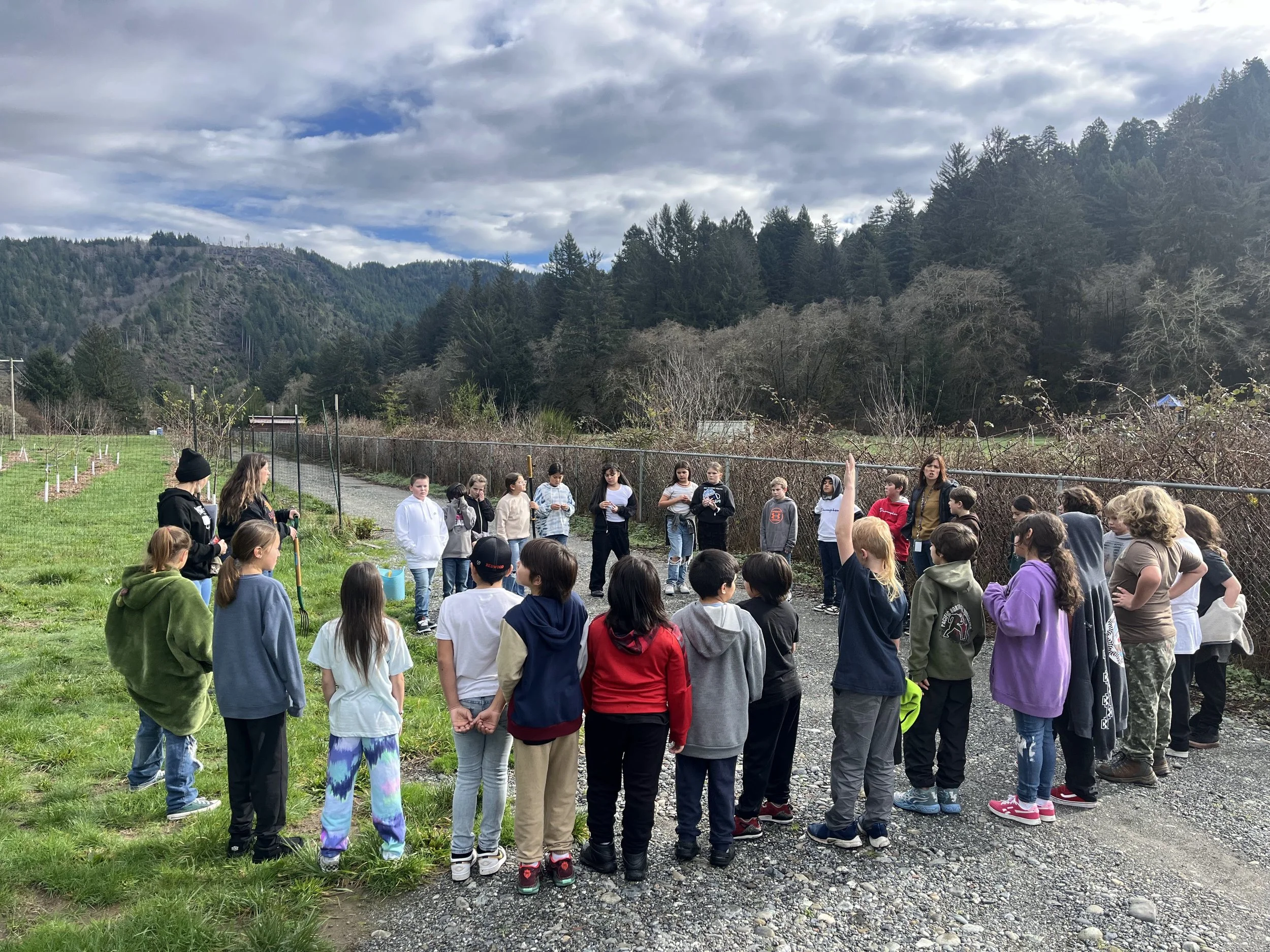
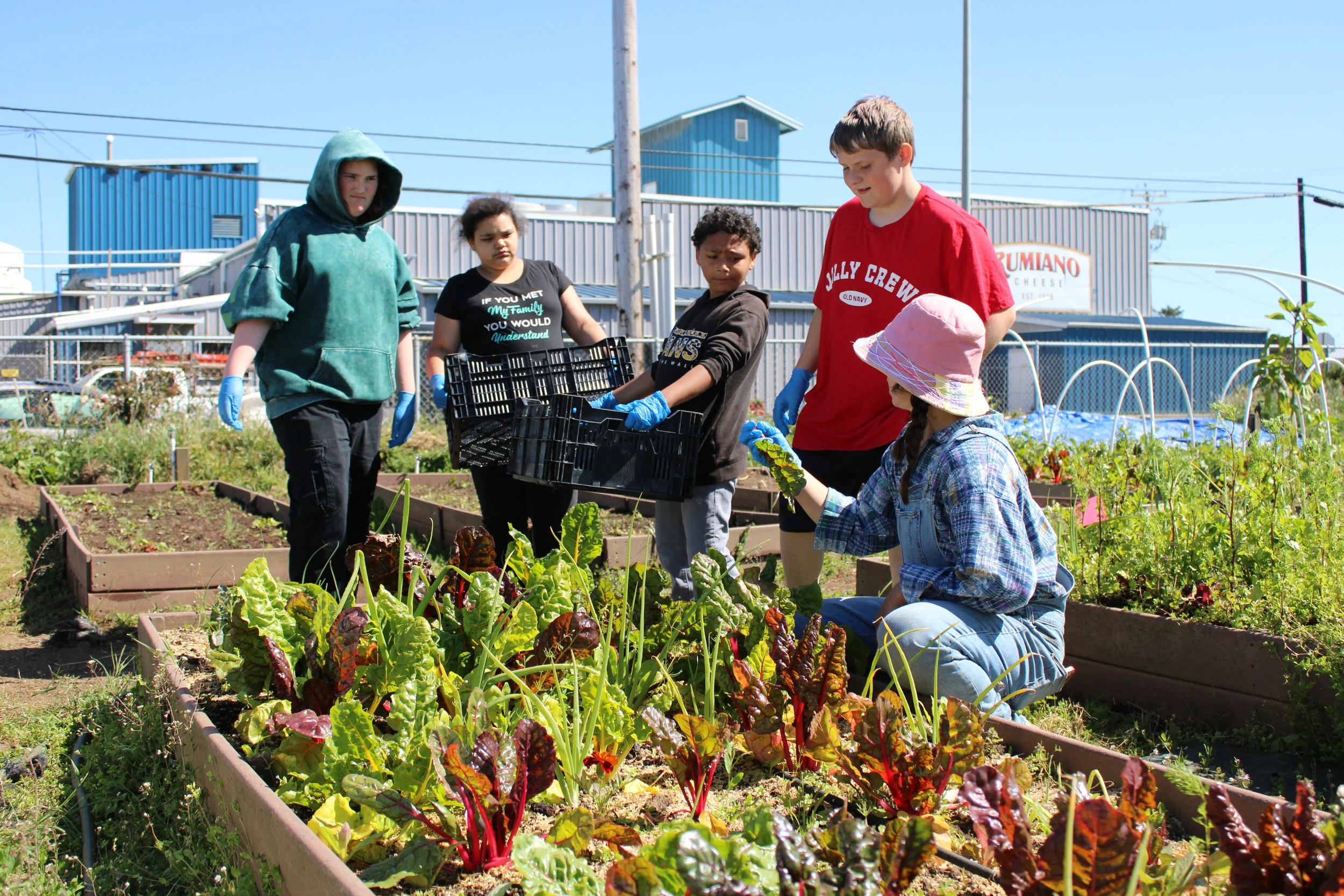
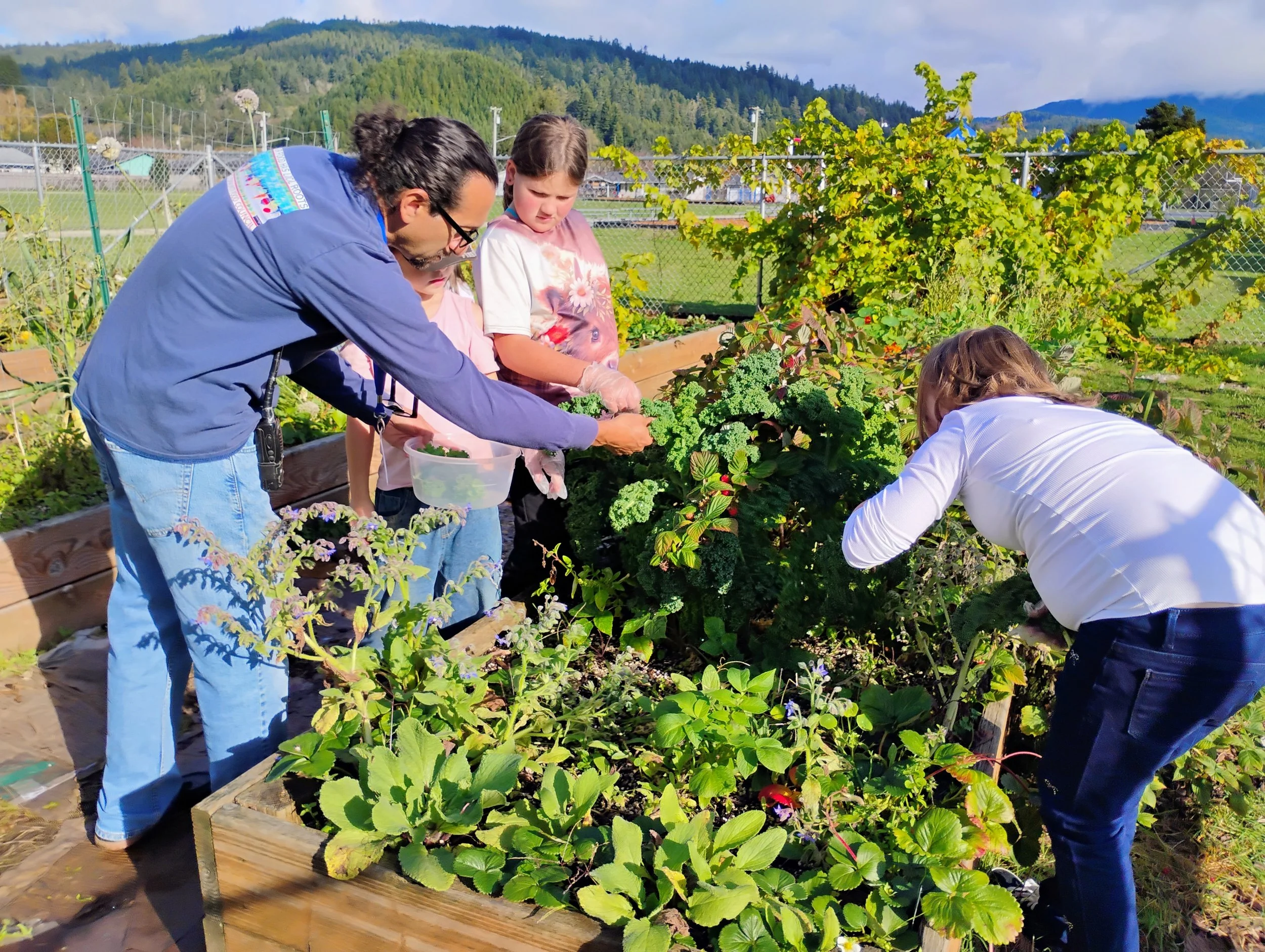
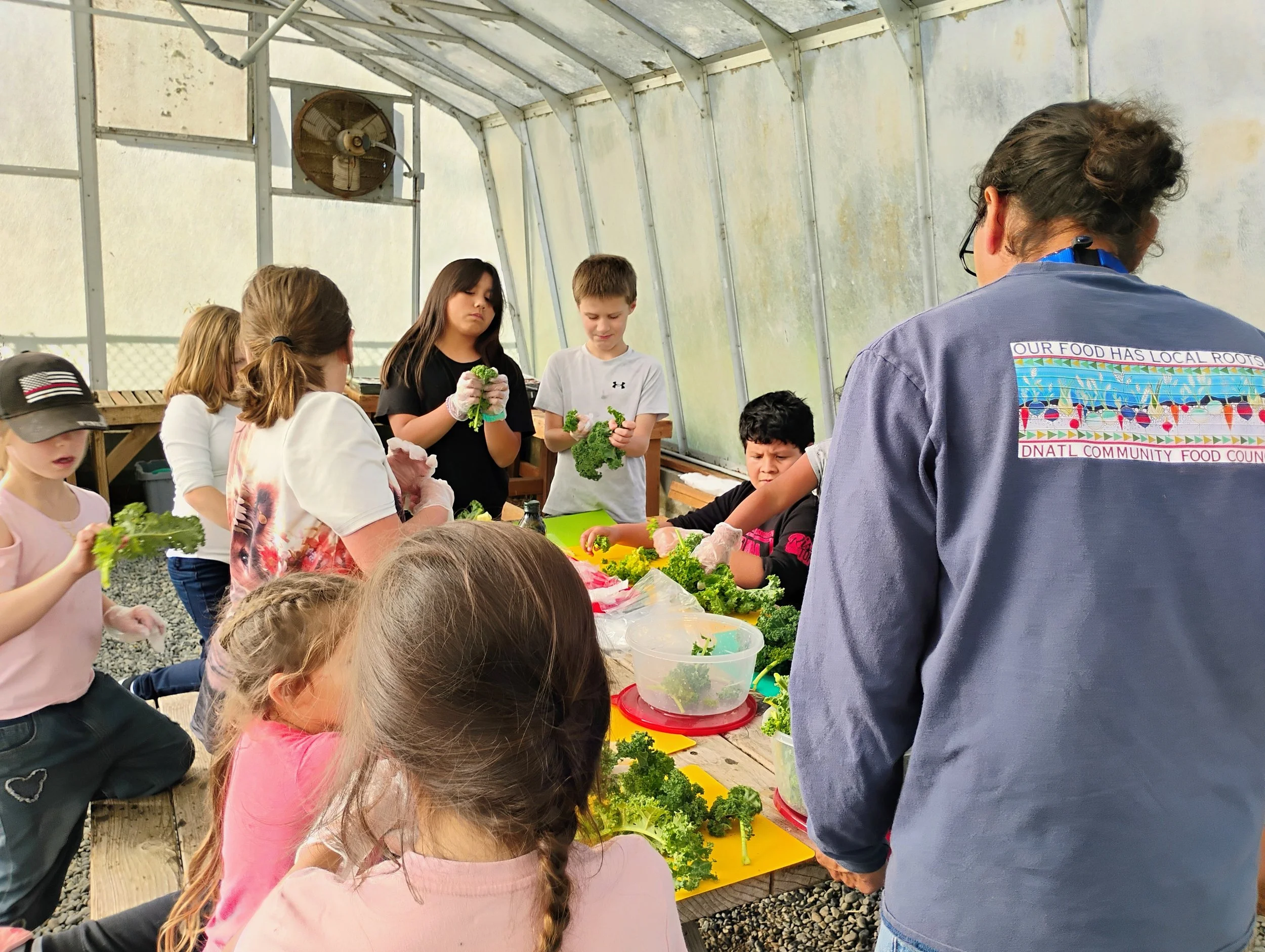
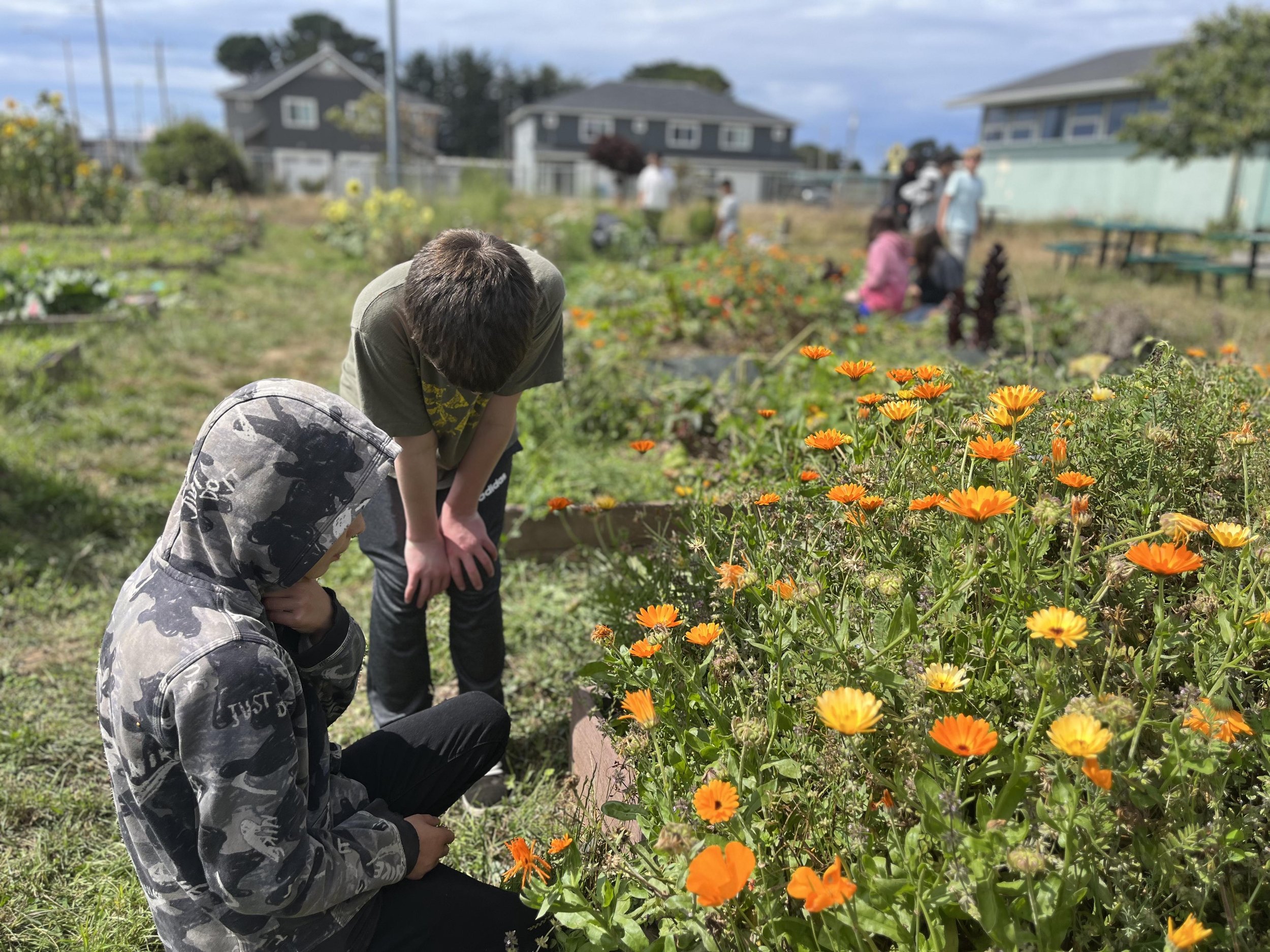
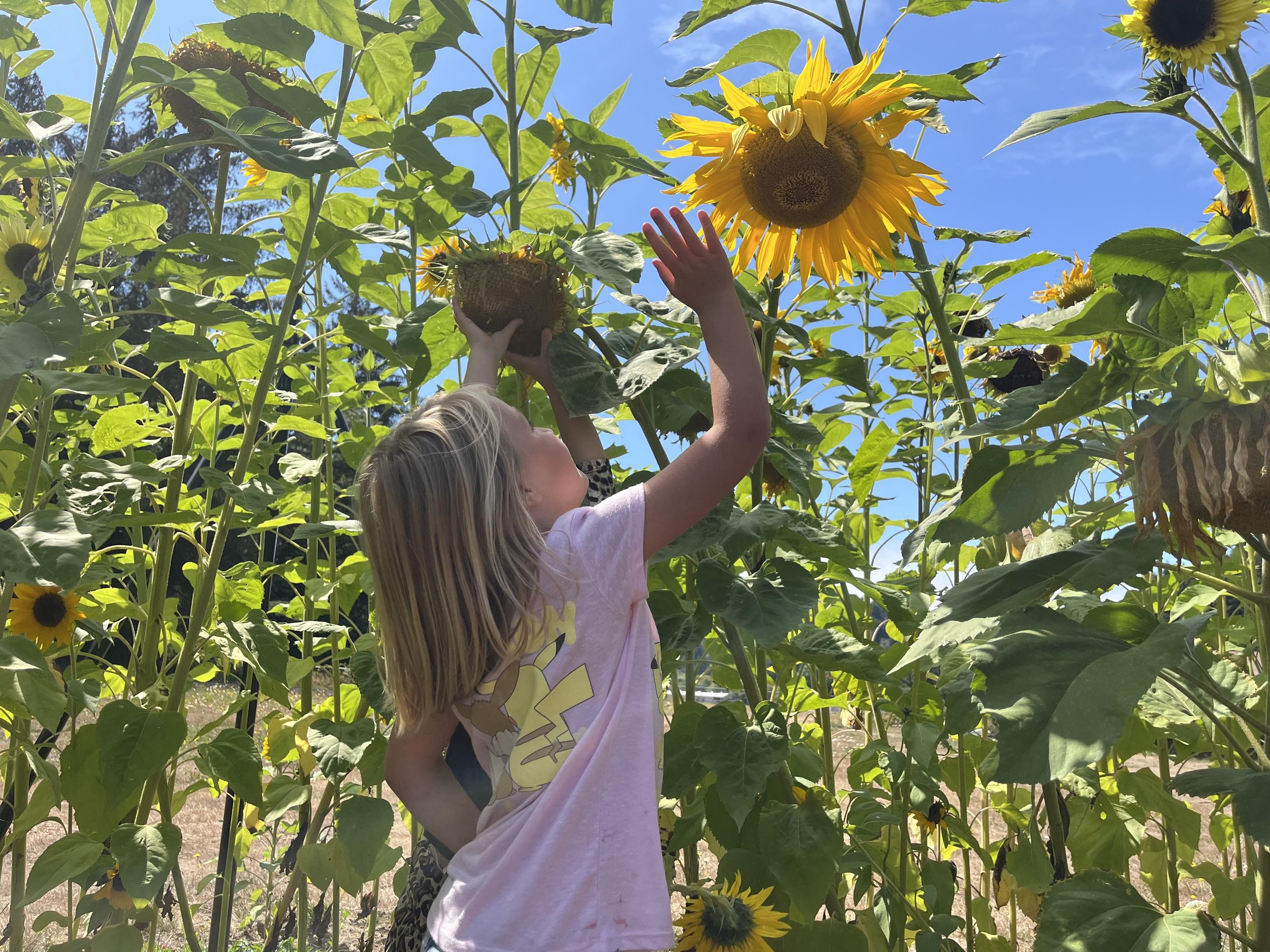
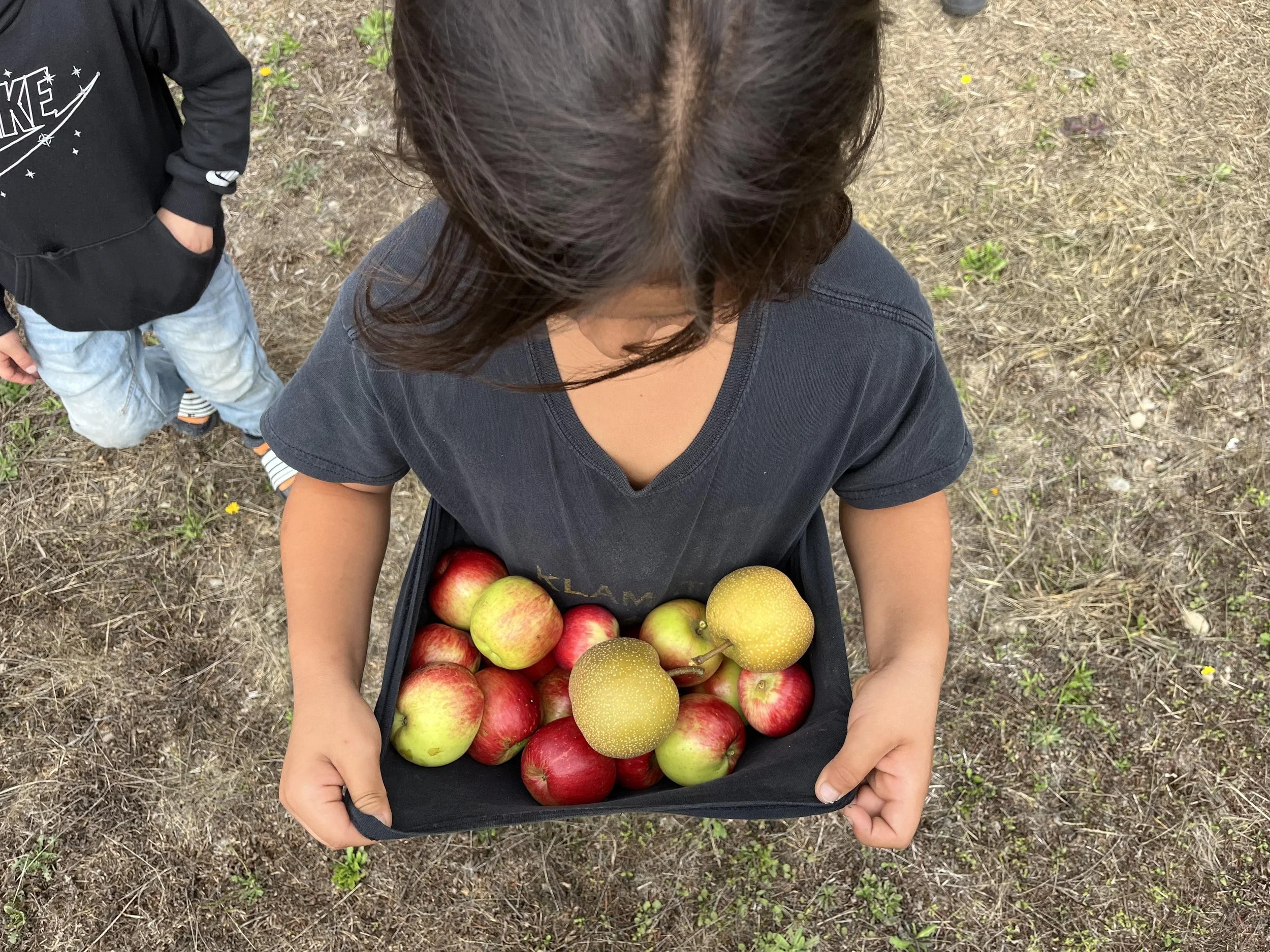
Our School Gardens program partners with the Del Norte County Unified School District to build and support gardens across seven public schools. We restore and create outdoor learning spaces where more than 400 students each week engage in hands-on garden education, while supporting teachers with curriculum and resources that integrate gardening into classroom learning.
Launch year: 2022
Coordinator: Melanie Cross
Source of funding: California Farm to School Incubator Grant Program, Klamath Promise Neighborhood
Since 2022, Del Norte & Tribal Lands Community Food Council (DNATL CFC), in collaboration with Del Norte School District, has been activating and building school gardens supported by Klamath Promise Neighborhood. 5 school gardens joined Garden Explorers, the club that brought back food education and hands-on garden activities.
After helping create these outdoor classrooms, DNATL CFC was awarded the California Farm to School Incubator Grant Program, which allowed us to include 2 more schools to our program. We serve ‘O Me-Nok Learning Center in Klamath, Joe Hamilton Elementary School, Crescent Elk Middle School, Bess Maxwell Elementary School, Pine Grove Elementary School, Sunset High School, and Smith River Elementary School.
2025 Impacts
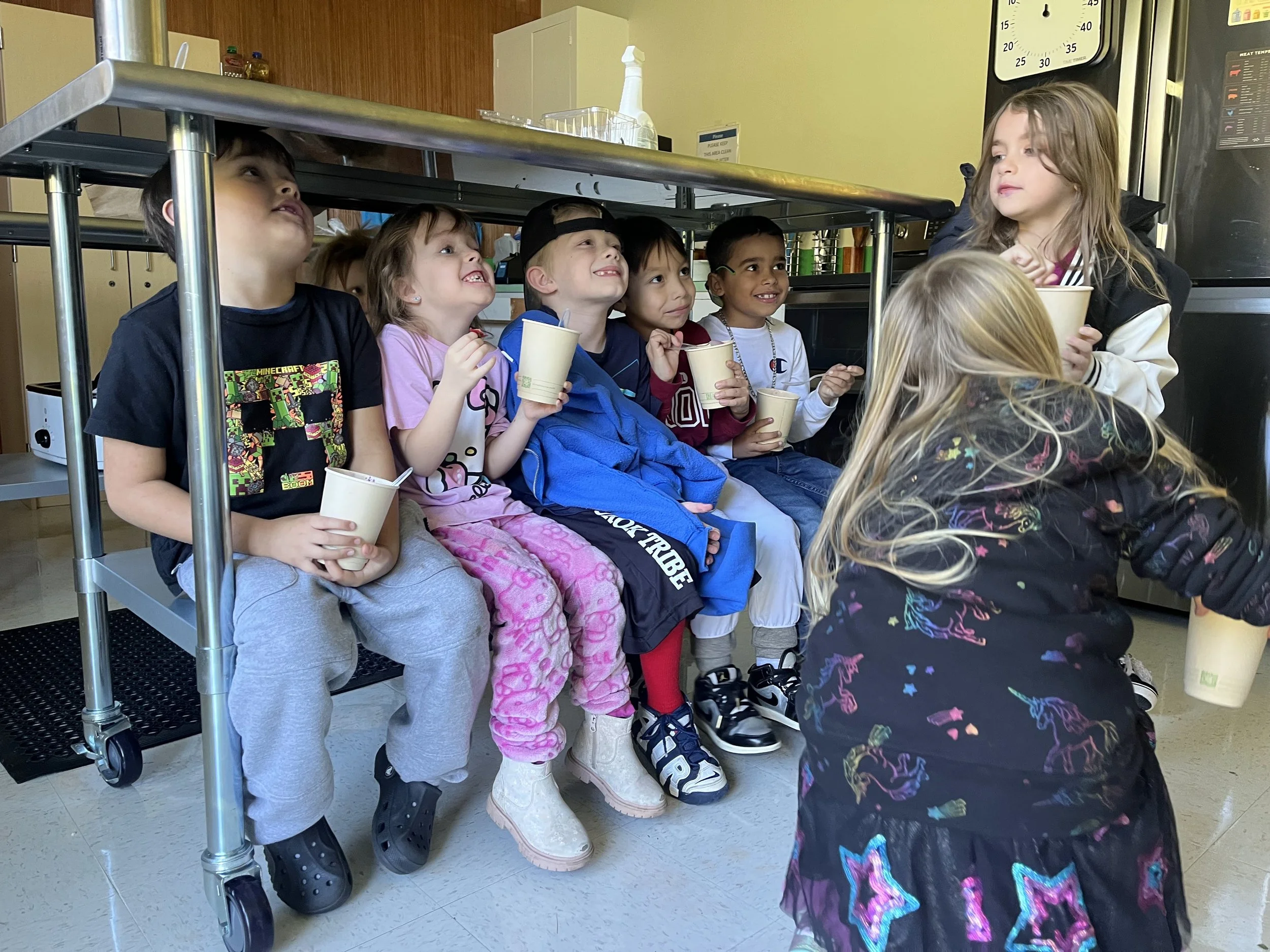
400+ Students Served Weekly
7 School Sites
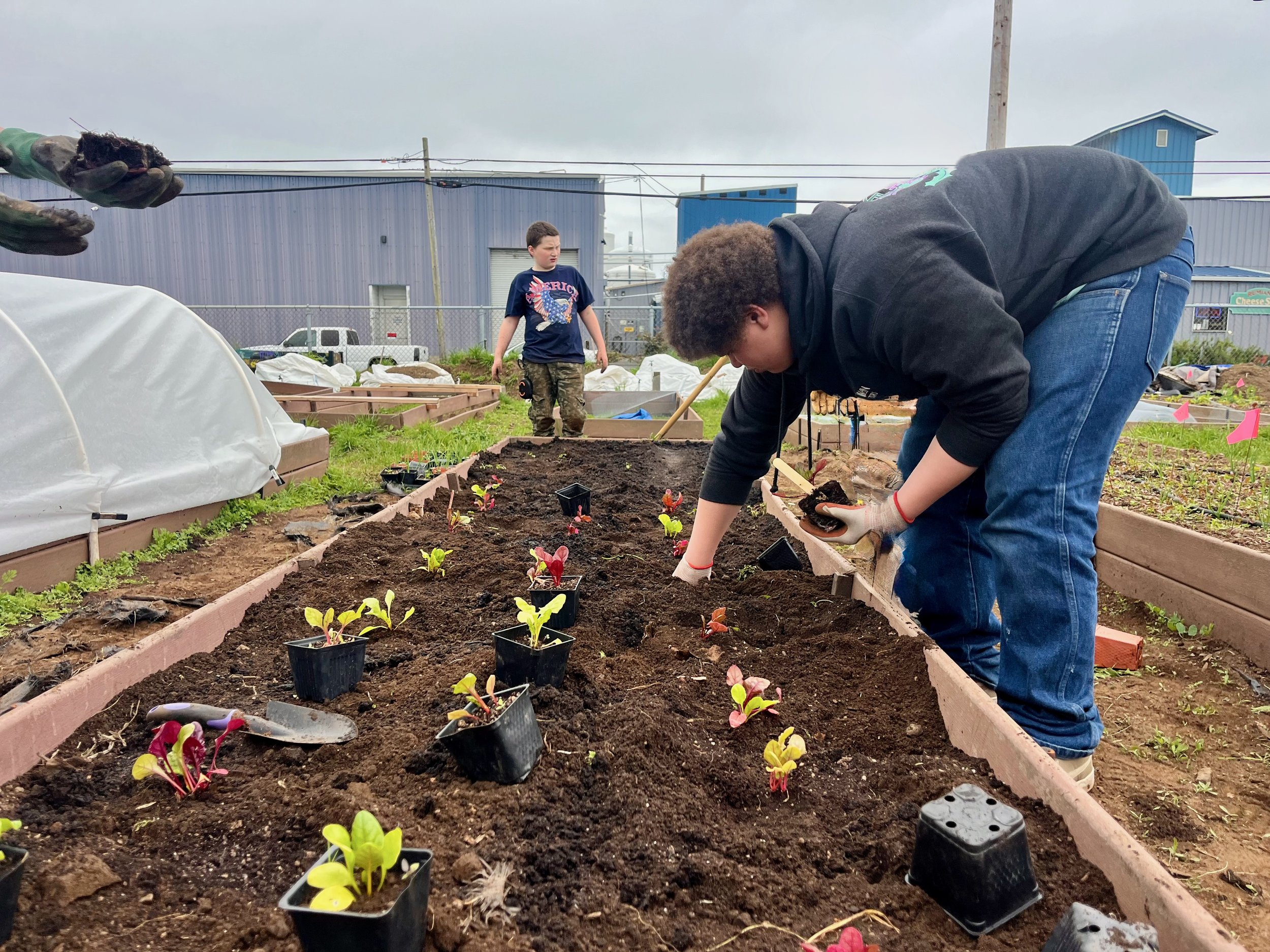
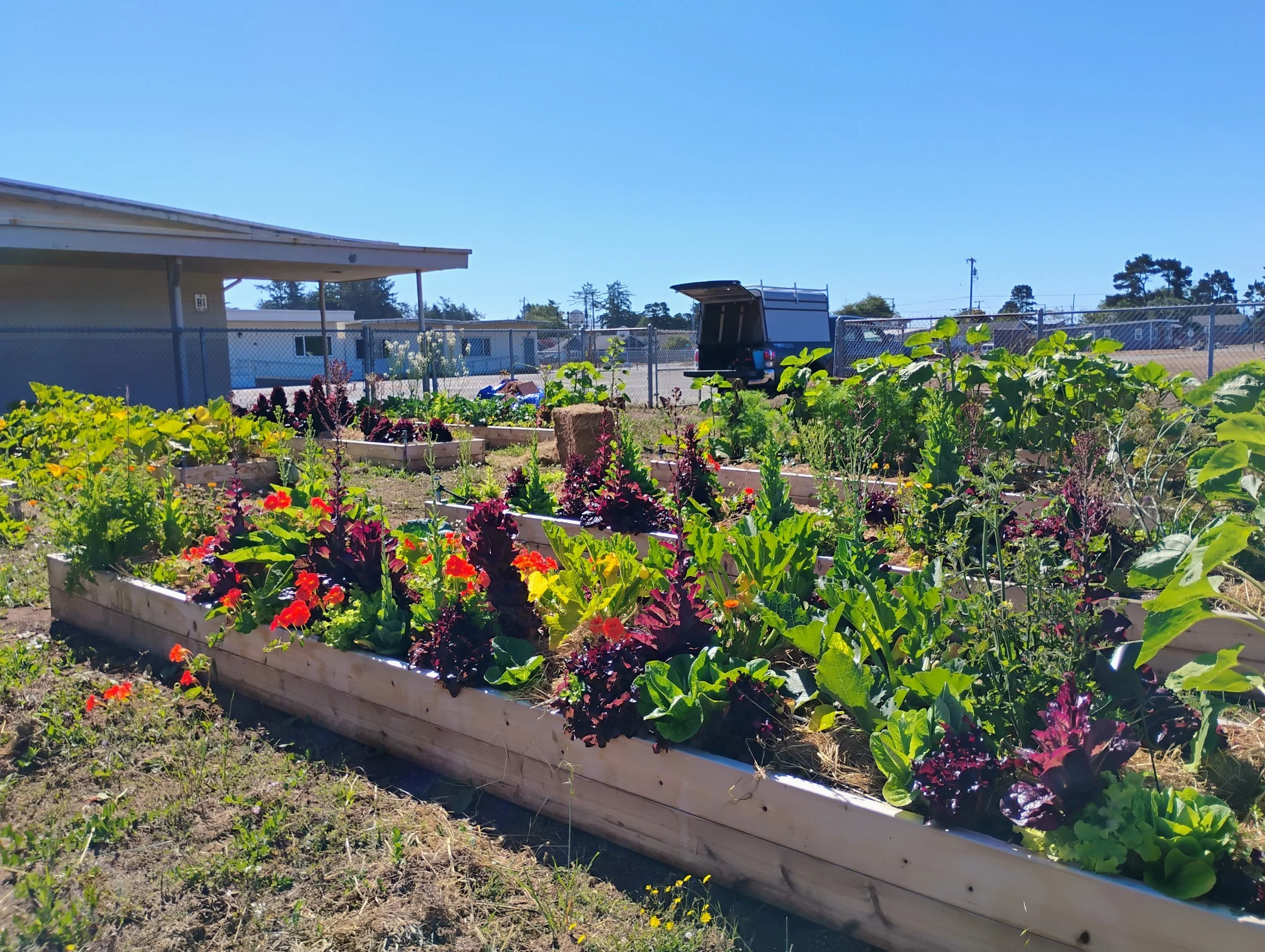
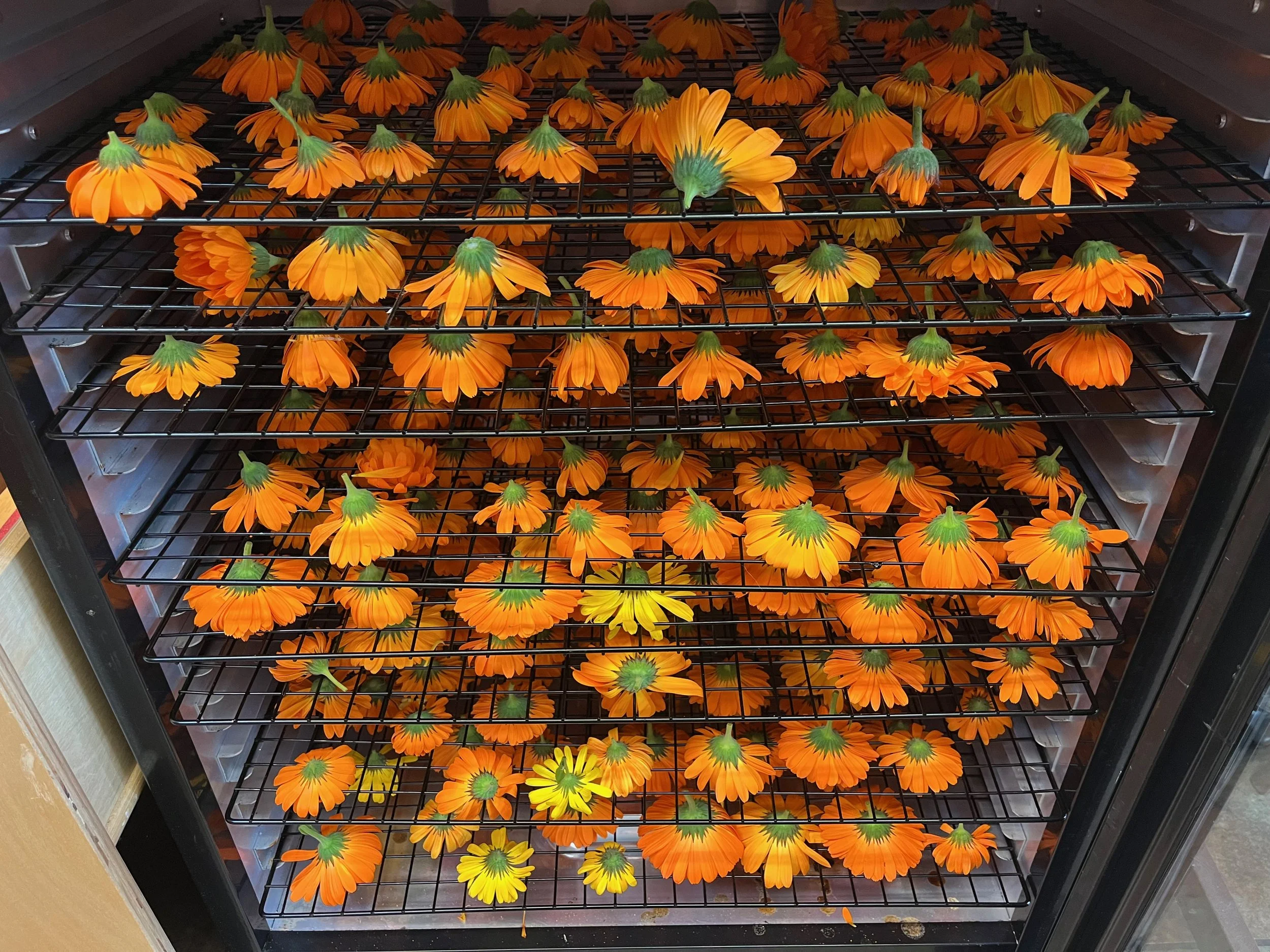
500+ Edible Plants Grown
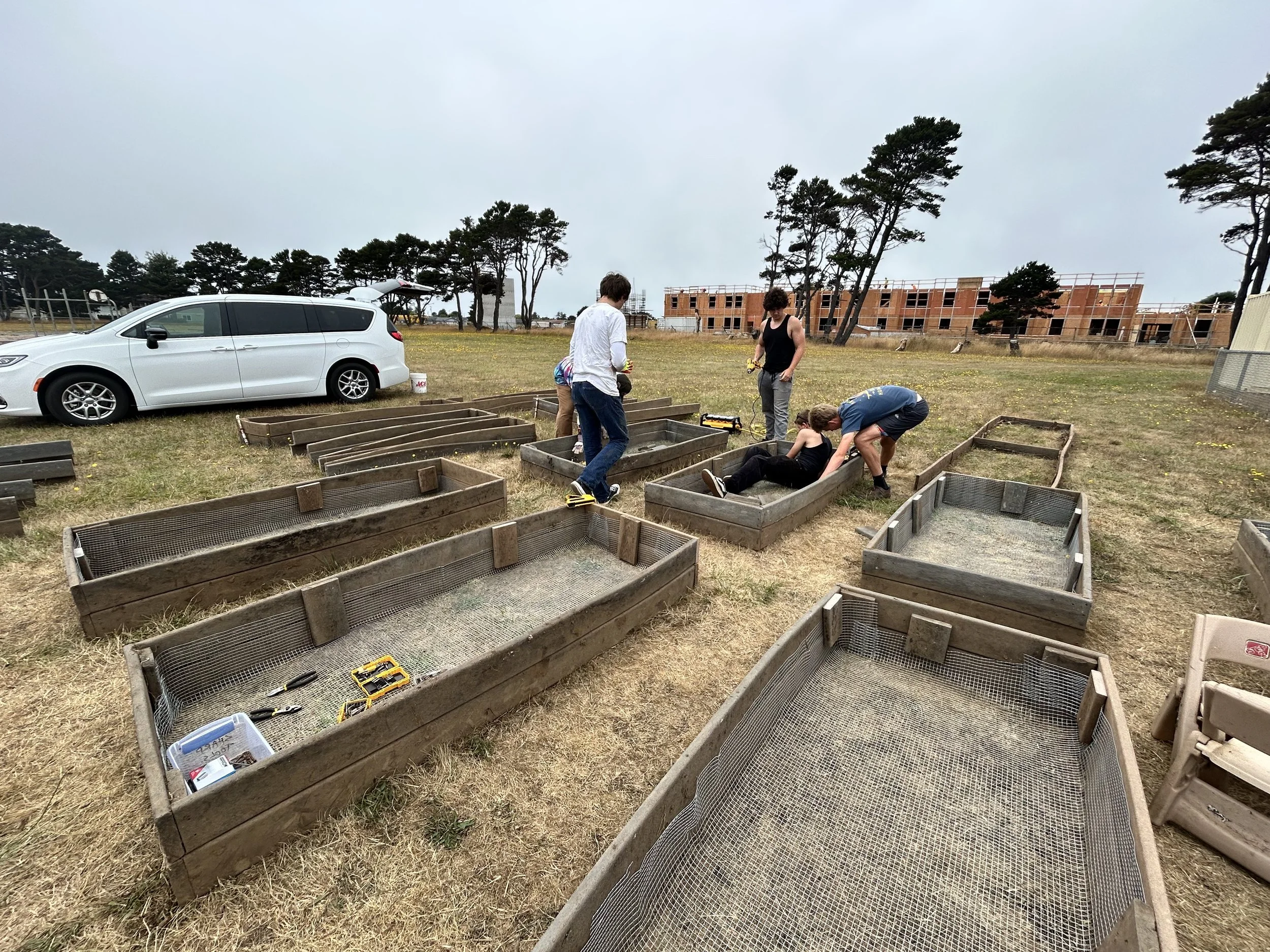
7 Gardens Rebuilt or Expanded
15–20 Educators Engaged Weekly
10+ Community & Tribal Partners
Current Actions
Supporting and revitalizing school gardens across 7 public schools in Del Norte County
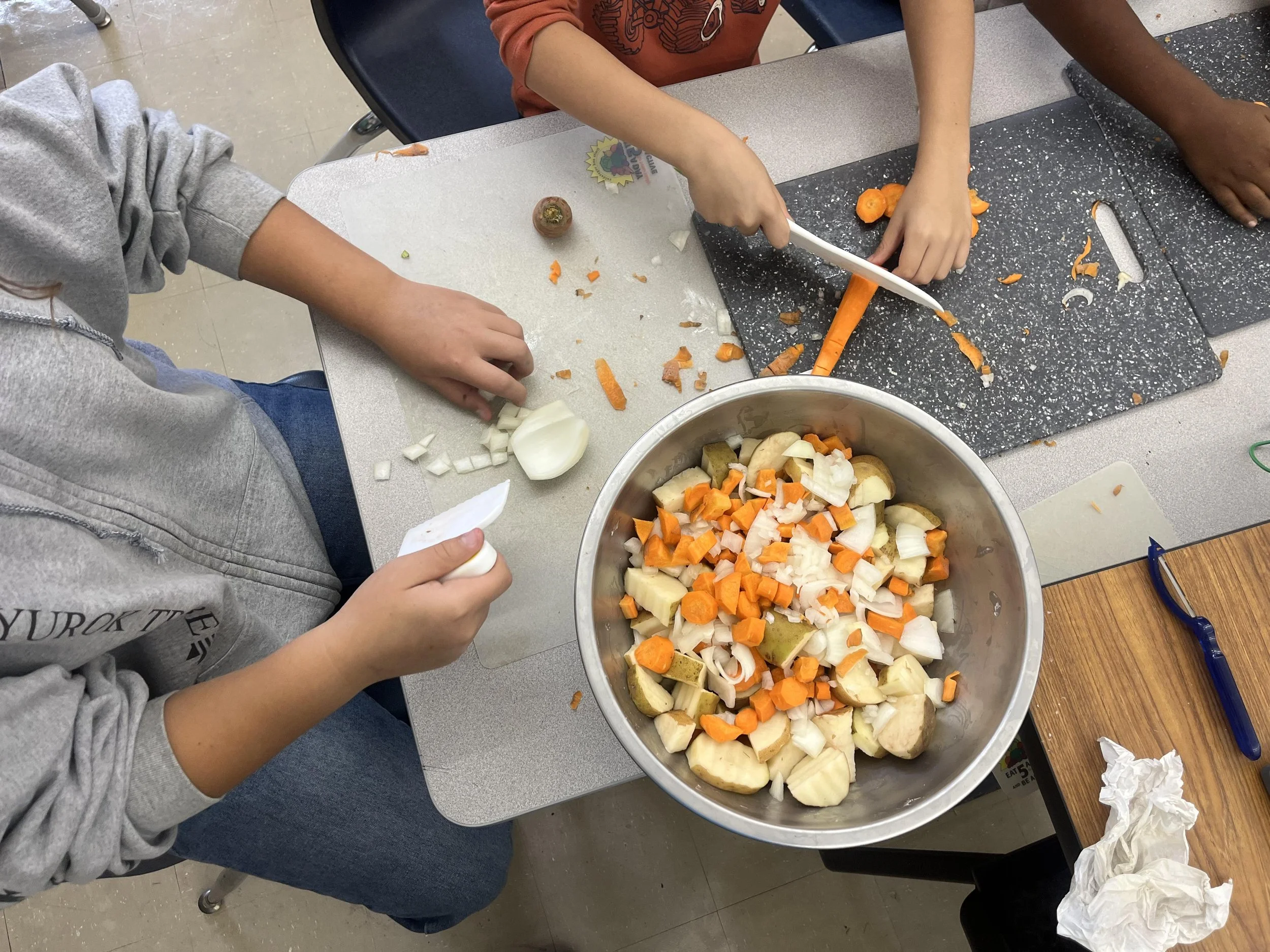
Providing hands-on garden, nutrition, and food education for more than 400 students each week
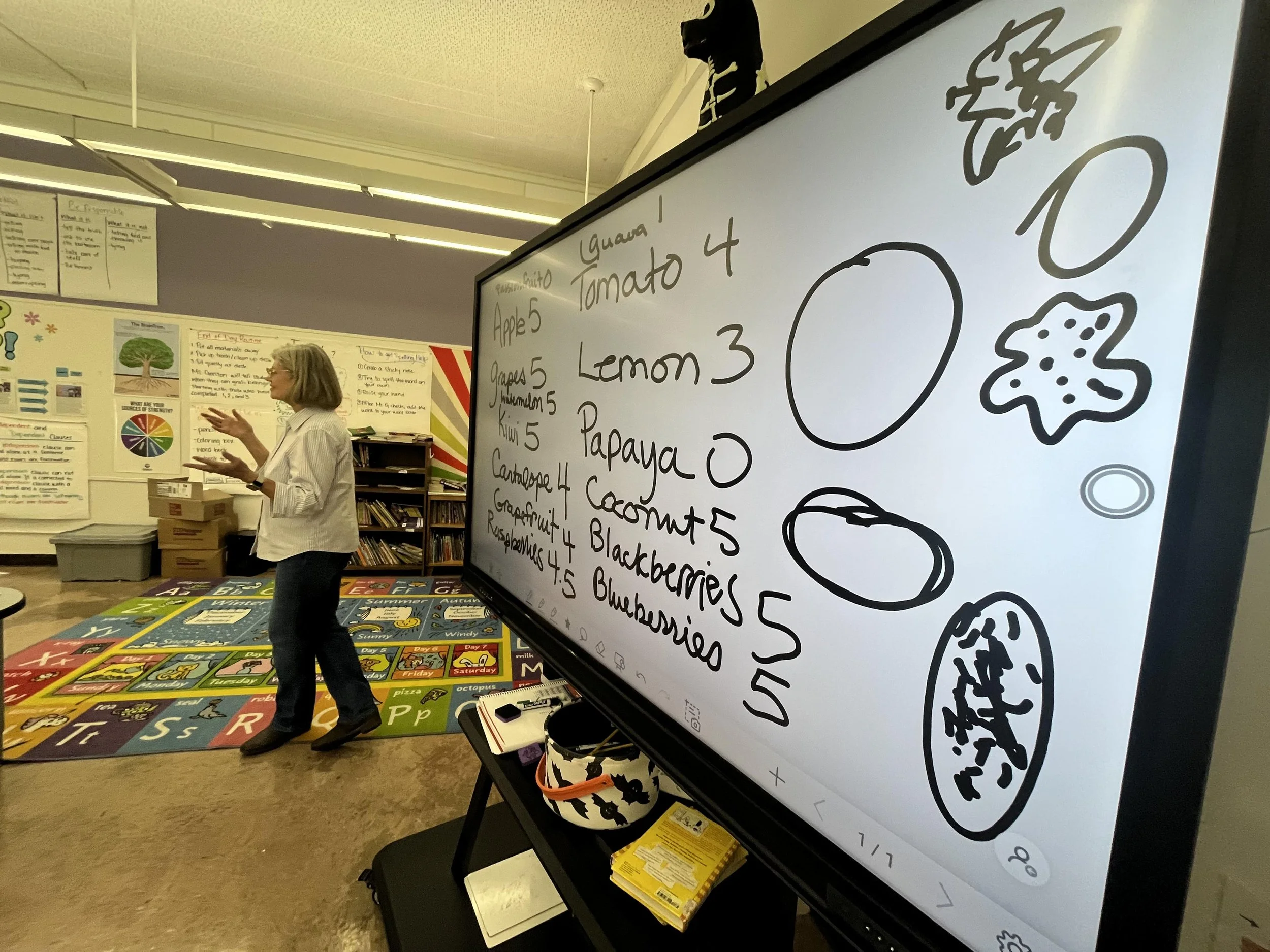
Supporting teachers and Expanded Learning Programs with garden-based education
Implementing curricula includingThe Growing Classroom by Life Lab, Nutrition to Grow On, and Junior Master Gardener’s, and Math in the Garden curriculum.
Creating opportunities for youth to learn about healthy eating, agriculture, and food systems
Connecting students with local farmers and food producers
Integrating culturally relevant education including Tribal, Latino, and Hmong knowledge
Strengthening partnerships with schools, educators, and community organizations across the county