Know your Farmer: Seabreeze Farms
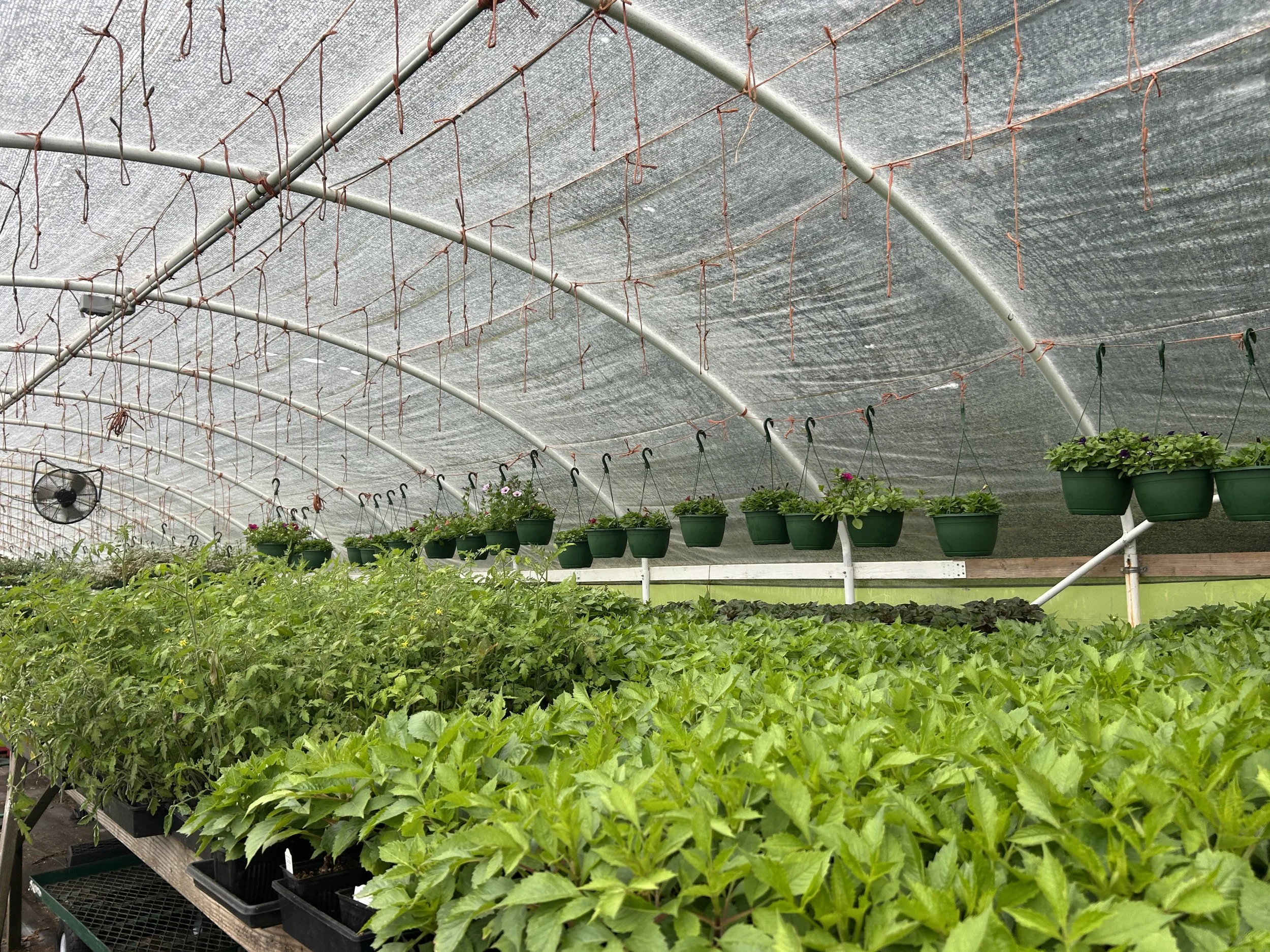
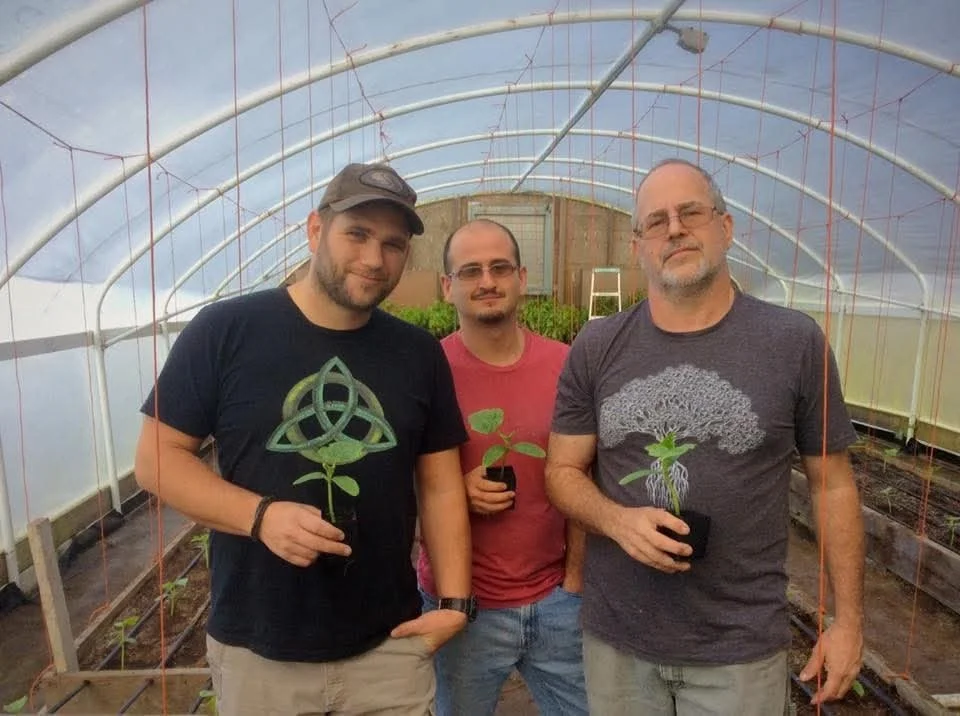
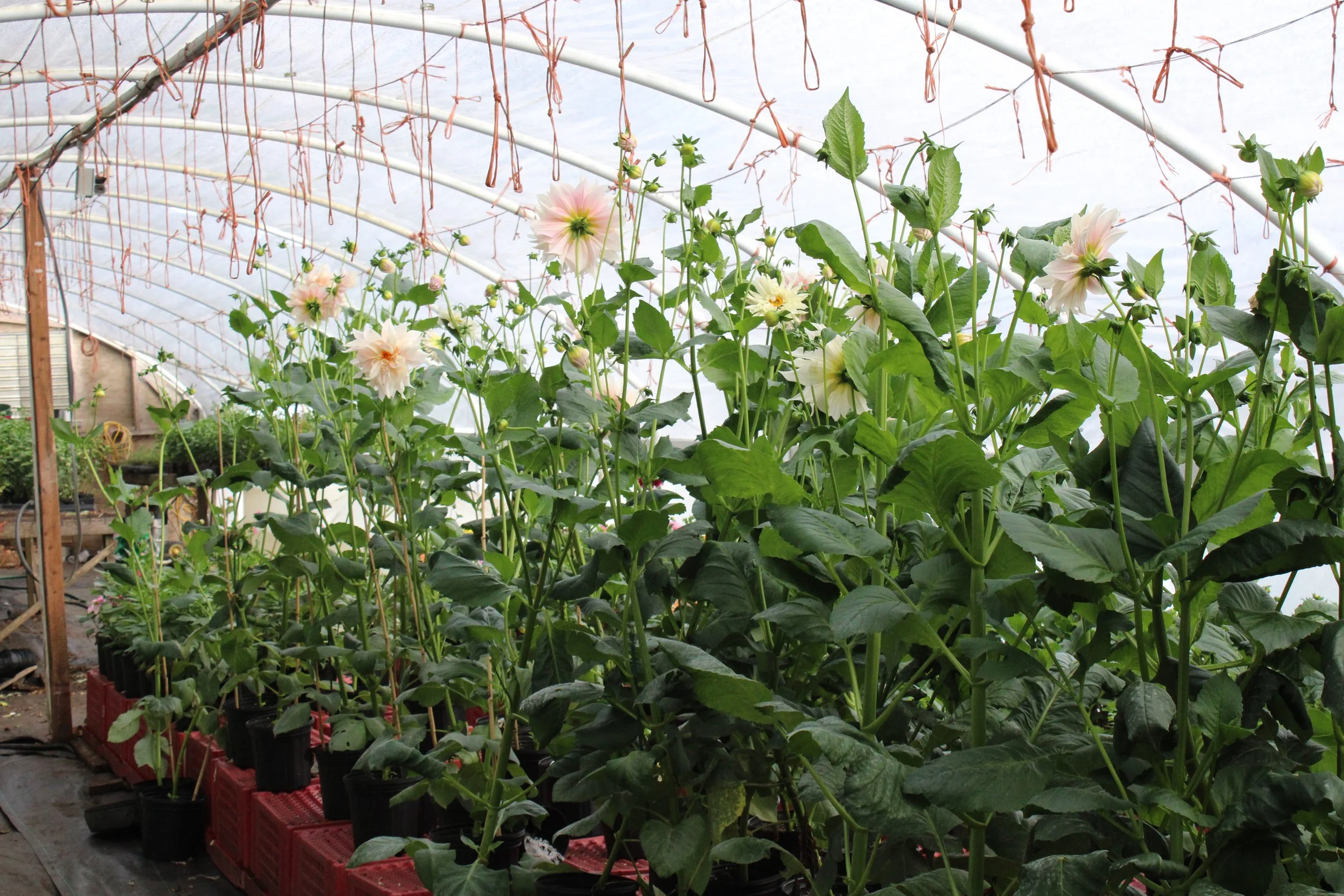
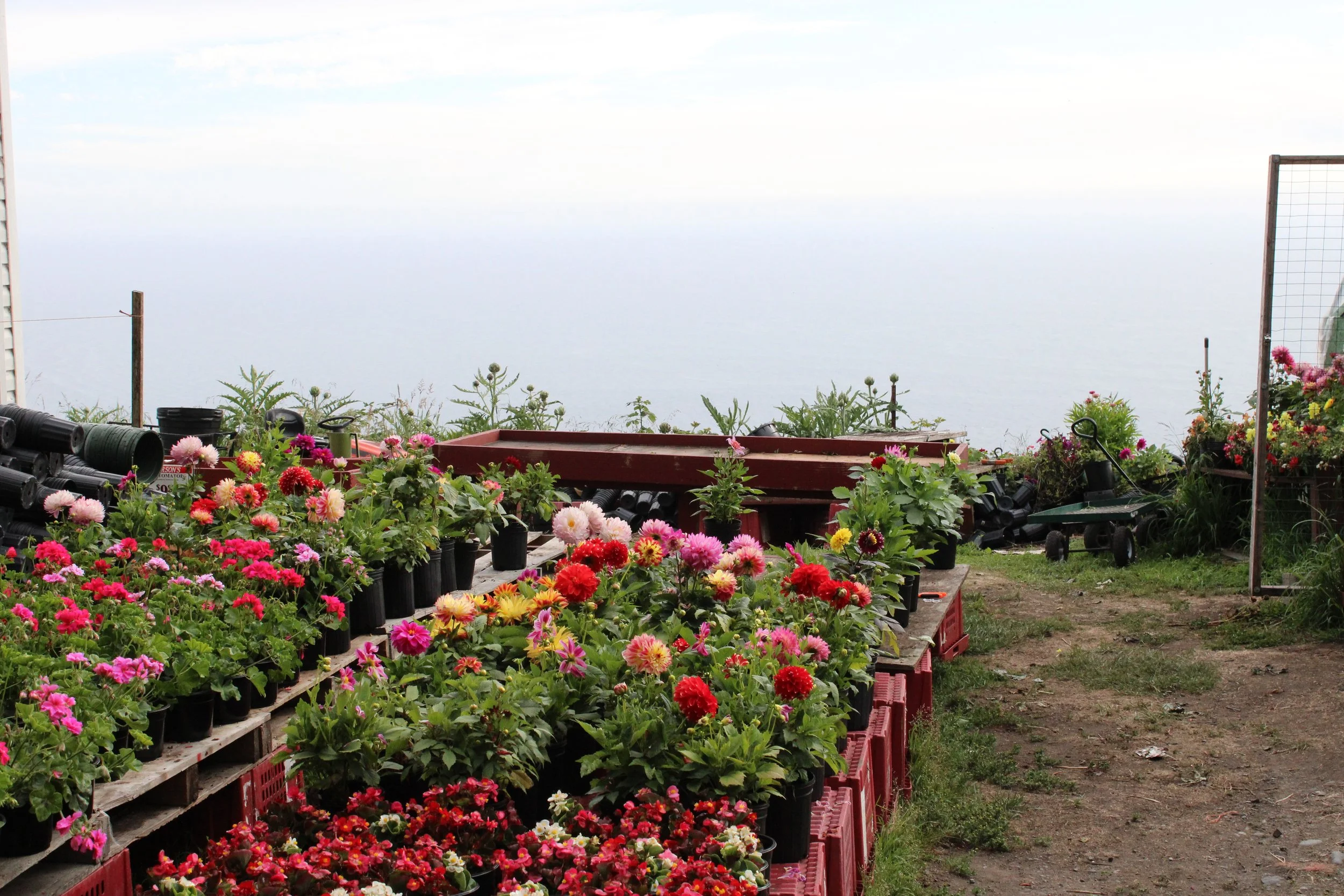
Dave and Kenny have been farming in Klamath, California since 2009, growing on land perched up on the cliffside just a few minutes up the road from the Requa Inn. Blooming dahlias, wild blackberry bushes, and artichoke beds overlook the ocean and mouth of the Klamath. They farm 8 acres, growing inside sturdy greenhouses that hold up against the strong coastal winds (sometimes reaching 80-90 mph). The greenhouses, all of which they’ve built themselves, make it possible to grow warm-season crops even in Klamath’s chilly climate.
After quitting his real estate job in his thirties, Dave turned to farming. He grew in Oregon until 2001, initially focusing on hydroponic growing, and met Kenny while selling at the Grants Pass farmers market. The two then moved to Humboldt and worked for a decade constructing hydroponic greenhouses. They spent years hoping to farm in Del Norte, but struggled to find land. In 2009, while perusing Craigslist looking for a truck, they happened upon the land listing for the property they now farm.
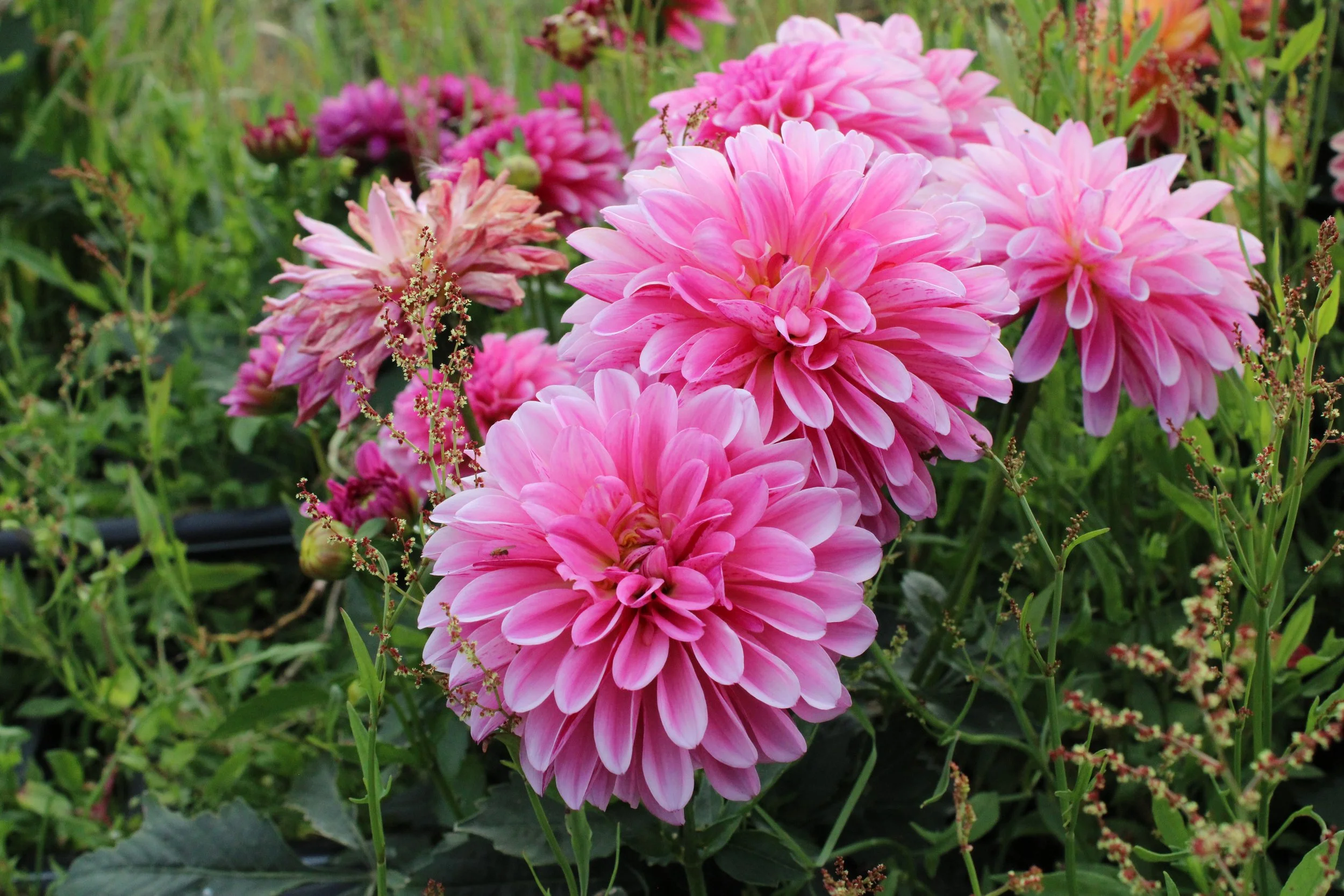
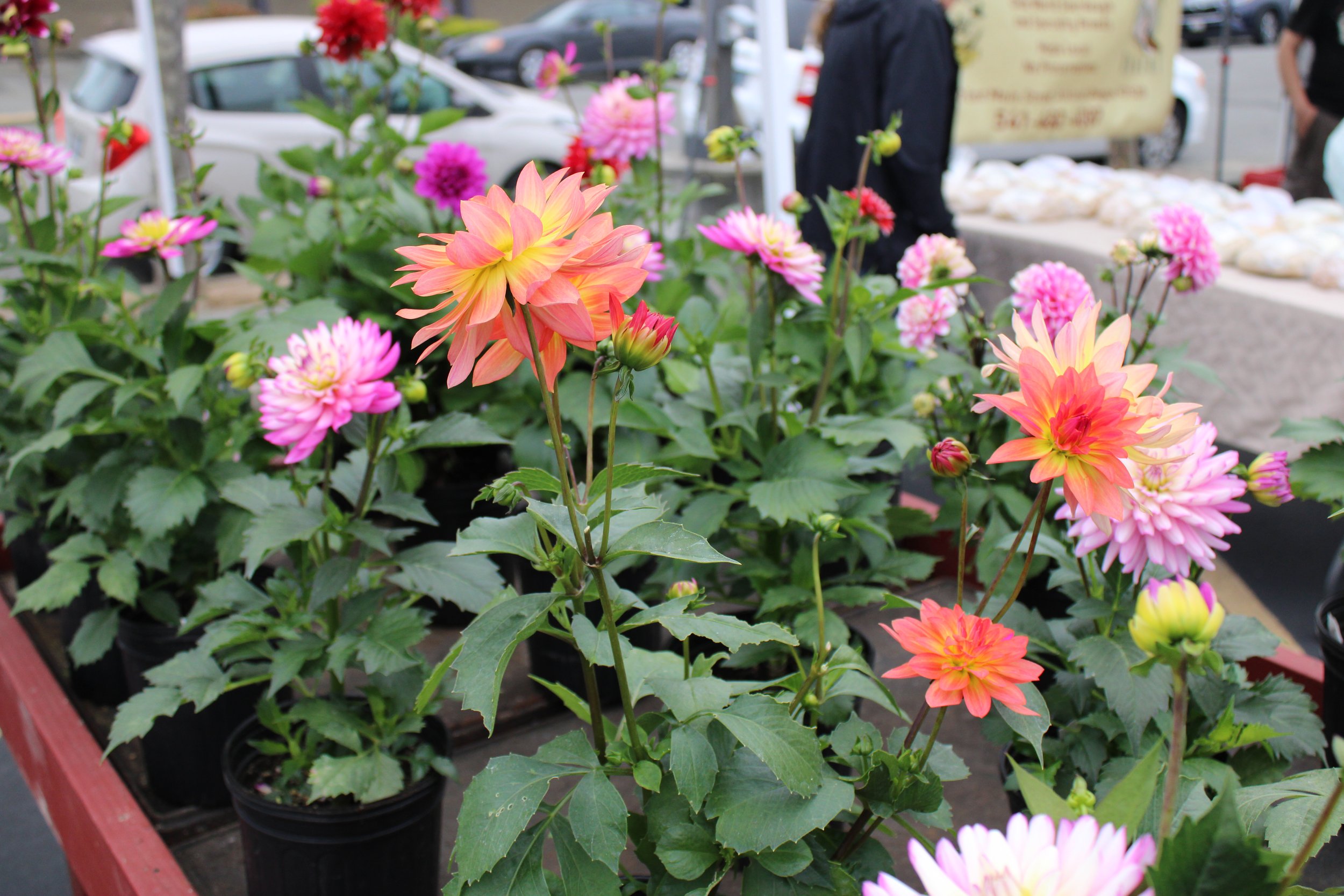
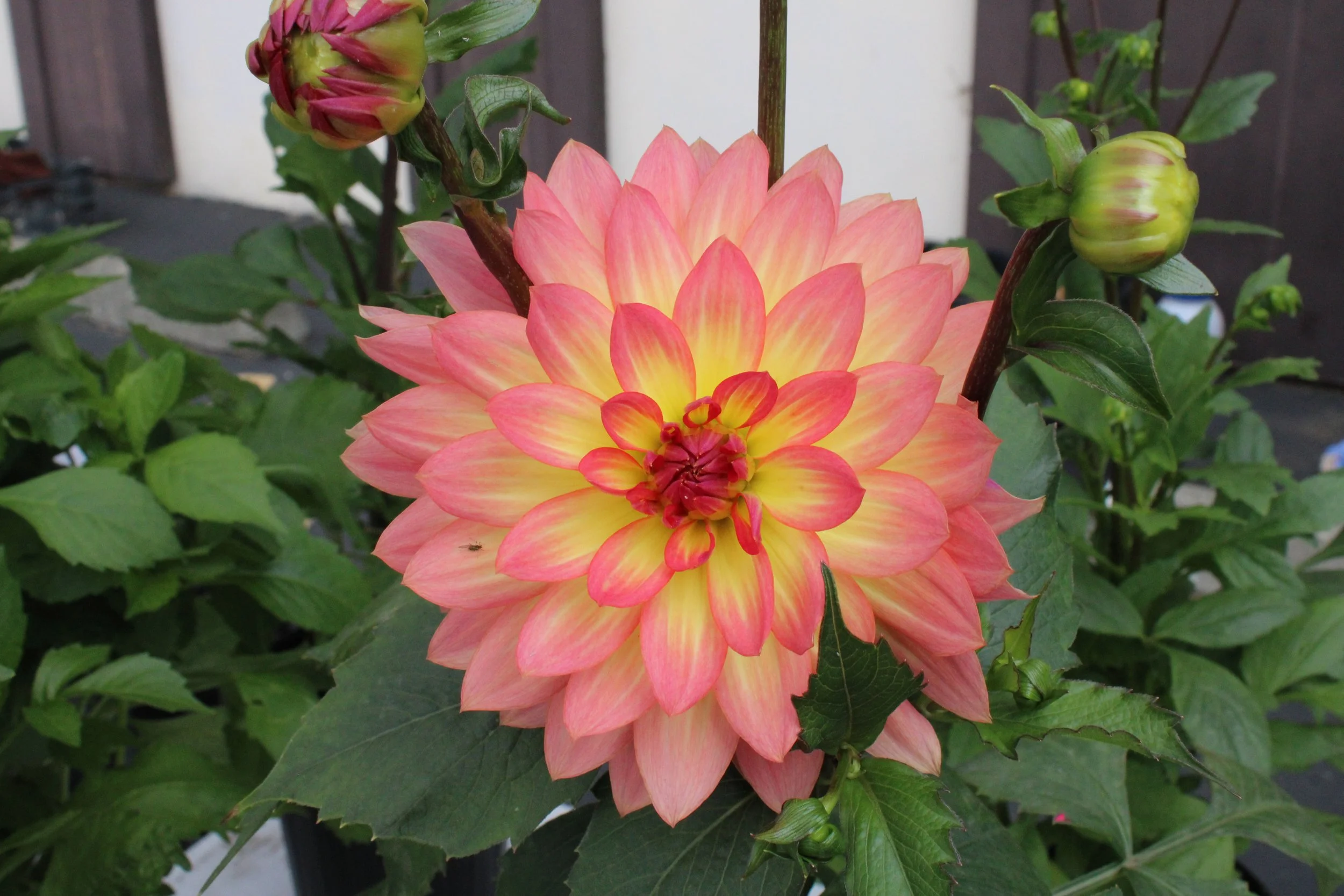
What’s on the farm: Dave and Kenny are known for their stunning, multi-colored dahlias. They experimented with just 300 plants their first year but quickly found that the flowers thrive on the farm. New varieties arrive to the farm as leaf cuttings just a few inches long. When they find varieties worth growing again, they’re able to dig up and divide the plant themselves. Dahlias have tubers that allow them to come back year after year, and can be separated to propagate new plants. This year, they grew over 9,000 dahlia plants.
Throughout the season their greenhouses will cycle through a variety of other flowers, from springtime petunias to holiday-season poinsettias. When the early season flowers move out, the greenhouses fill with tomatoes, peppers, and English cucumbers. In their outdoor beds facing the ocean, you can find chives, artichokes, and Walla Walla sweet onions.
Dave and Kenny experiment each year. Some varieties love their conditions, while others struggle with the salty air and high humidity of their ocean-side spot. Cherry tomatoes, English cucumbers, and sugar snap peas are among their favorites. Their English cucumbers are seedless, thin-skinned, and have a more delicate flavor than other varieties. These unique cucumbers are so delicate that they must be shrink wrapped right after harvest to retain their moisture. Once packaged, they can be stored at room temperature and still keep their crunch.
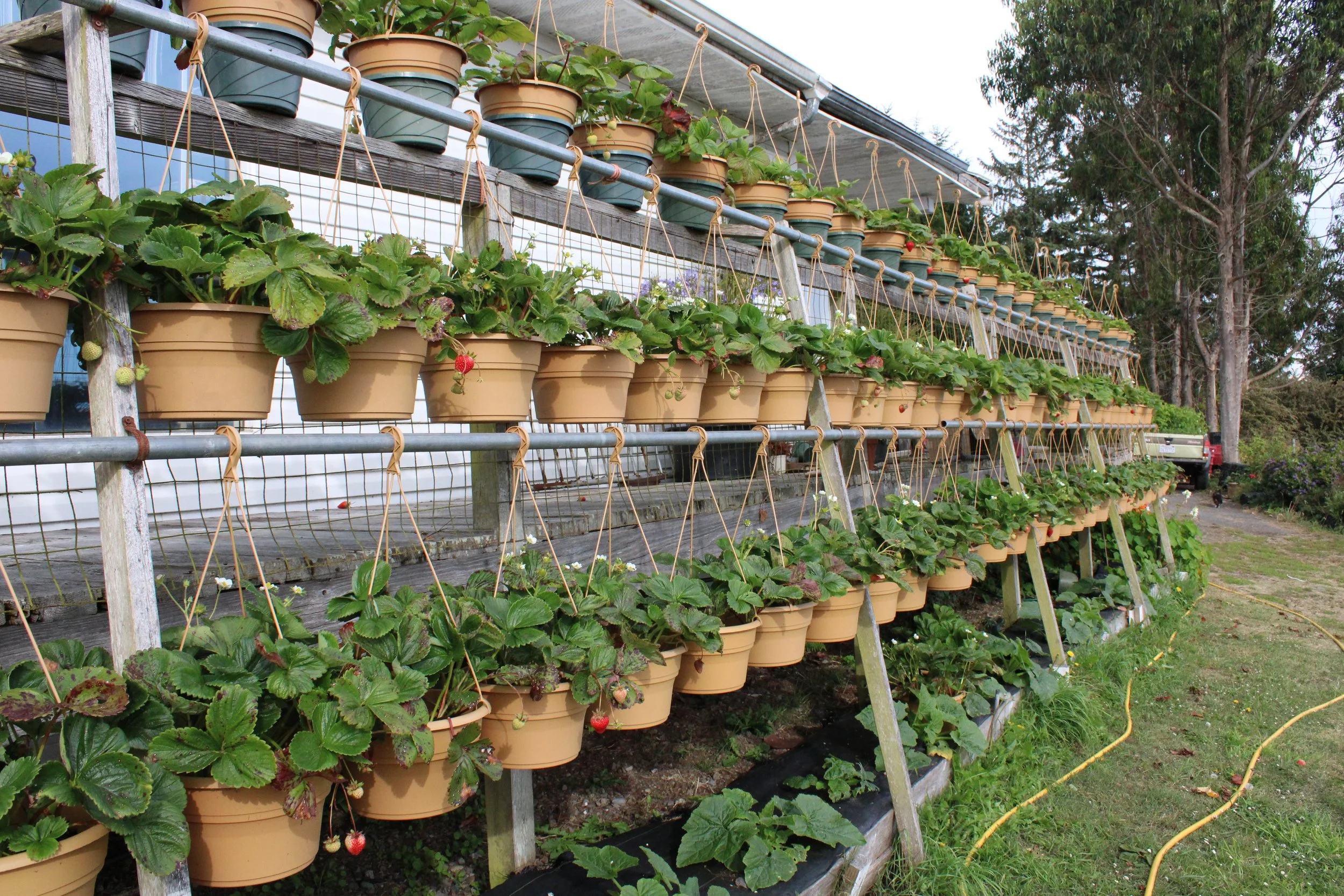
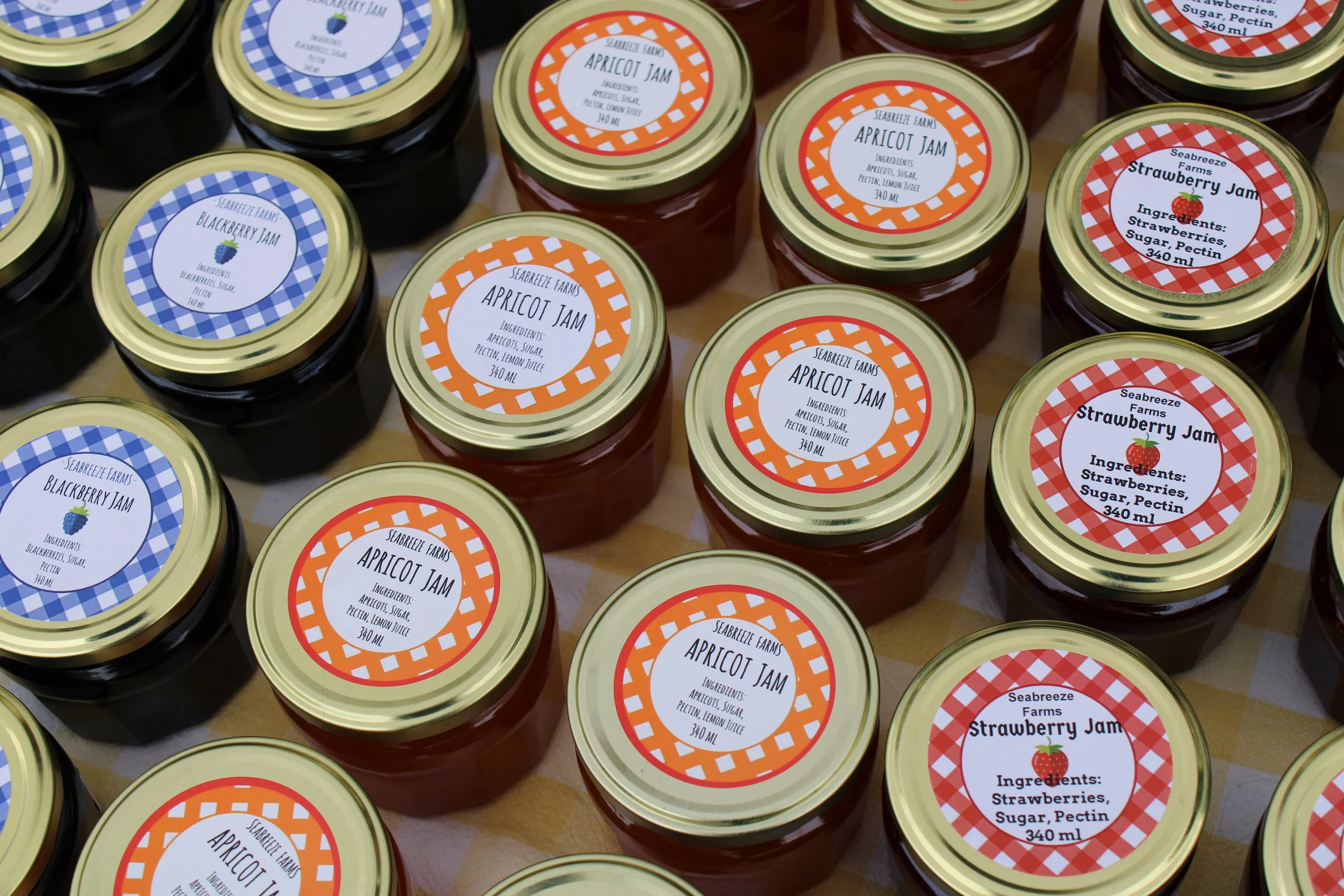
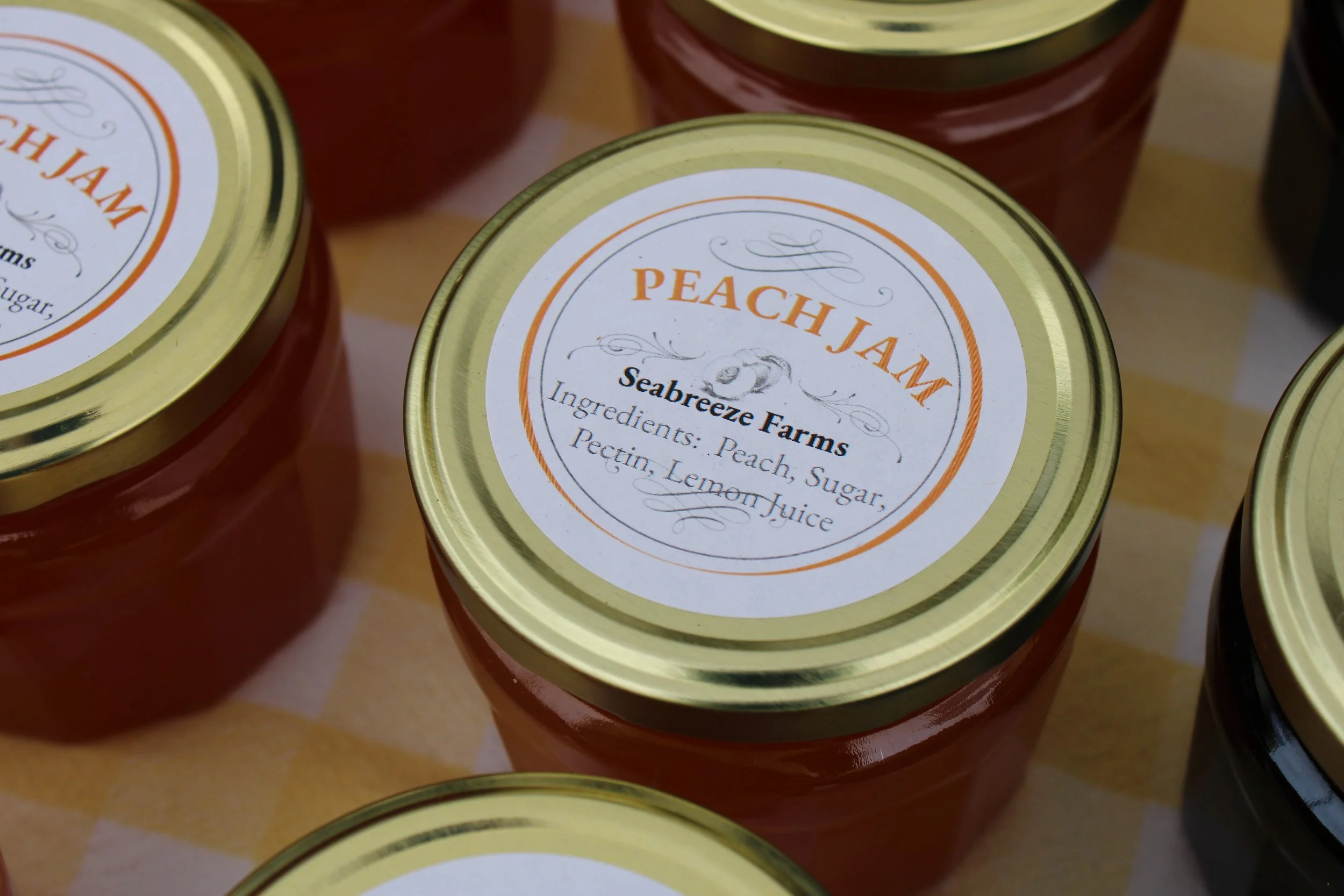
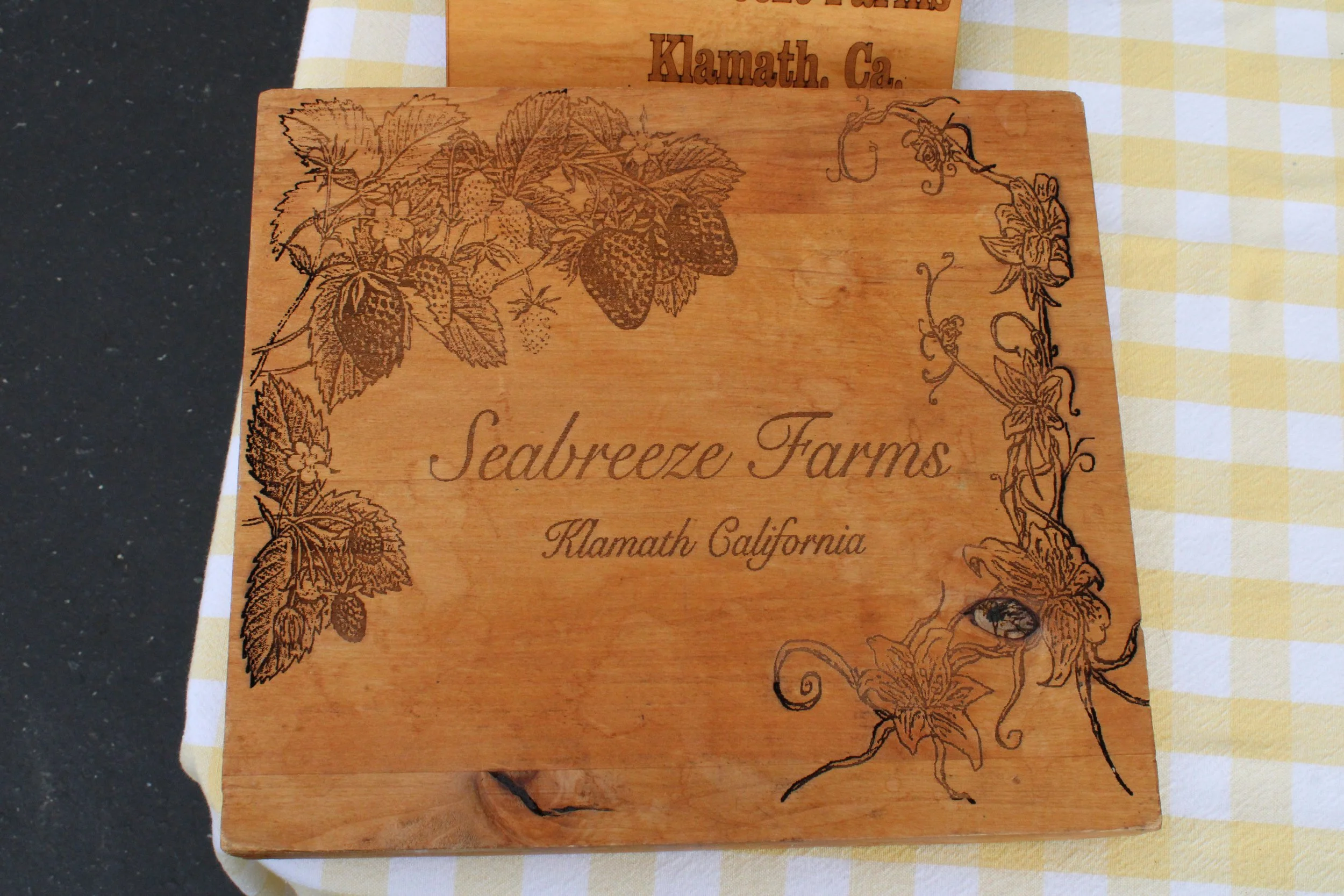
Their entire strawberry crop (grown in hanging baskets to keep the slugs off) goes toward on-farm jam production. Their cottage food license allows them to make small batches of fresh jam in their farm kitchen. With just a high-power immersion blender and stovetop canning process, they churn out various flavors throughout the summer. The wild blackberries ripening all around the farm are destined for jam. Later in the summer they hope to make peach, cherry, and plum with fruit sourced from farmer friends up near Grants Pass.
Growing practices: When they first moved onto the property, Dave and Kenny found the soil to be low quality and hard to work with. They now grow their crops almost entirely in raised containers. They had previously farmed using hydroponics (growing crops in water), but found growing in soil to be more forgiving and less tech-dependent. With years of experimentation, they’ve come up with the perfect ratios of compost, perlite, and other soil mixings to meet the nutrient needs of their diverse crop selection. Dave and Kenny use their space creatively, choosing crops that grow well together, and continue to draw from permaculture practices. Thai and Genovese basil seedlings are planted in the same crates as tomatoes, growing low enough to act as ground cover, keeping weeds at bay without competing with the tomato plant above.
The farmers use the natural nutrient cycling of their crops to their advantage. As tomatoes are finishing up for the season, they’ll plant pea seedlings in the same container and cut the tomato at its base, to allow decomposing roots to feed the growing pea plants. At the end of their own cycle, the winter pea crop leaves behind nitrogen-rich soil that’s perfect to add to the soil mix for next summer’s tomatoes.
Where can you find their products? Seabreeze sells the bulk of their produce to the Del Norte School District and to the Family Resource Center food pantry. You can find their flowers at Elkhorn Herbals Nursery in the Spring/Summer, and vegetables, jams, dahlias and more at the Downtown Crescent City Farmers’ Market every Wednesday until the end of October. Their cucumbers, tomatoes, and other crops will also make appearances in Community Food Council’s Harvest Box, which runs through November.