
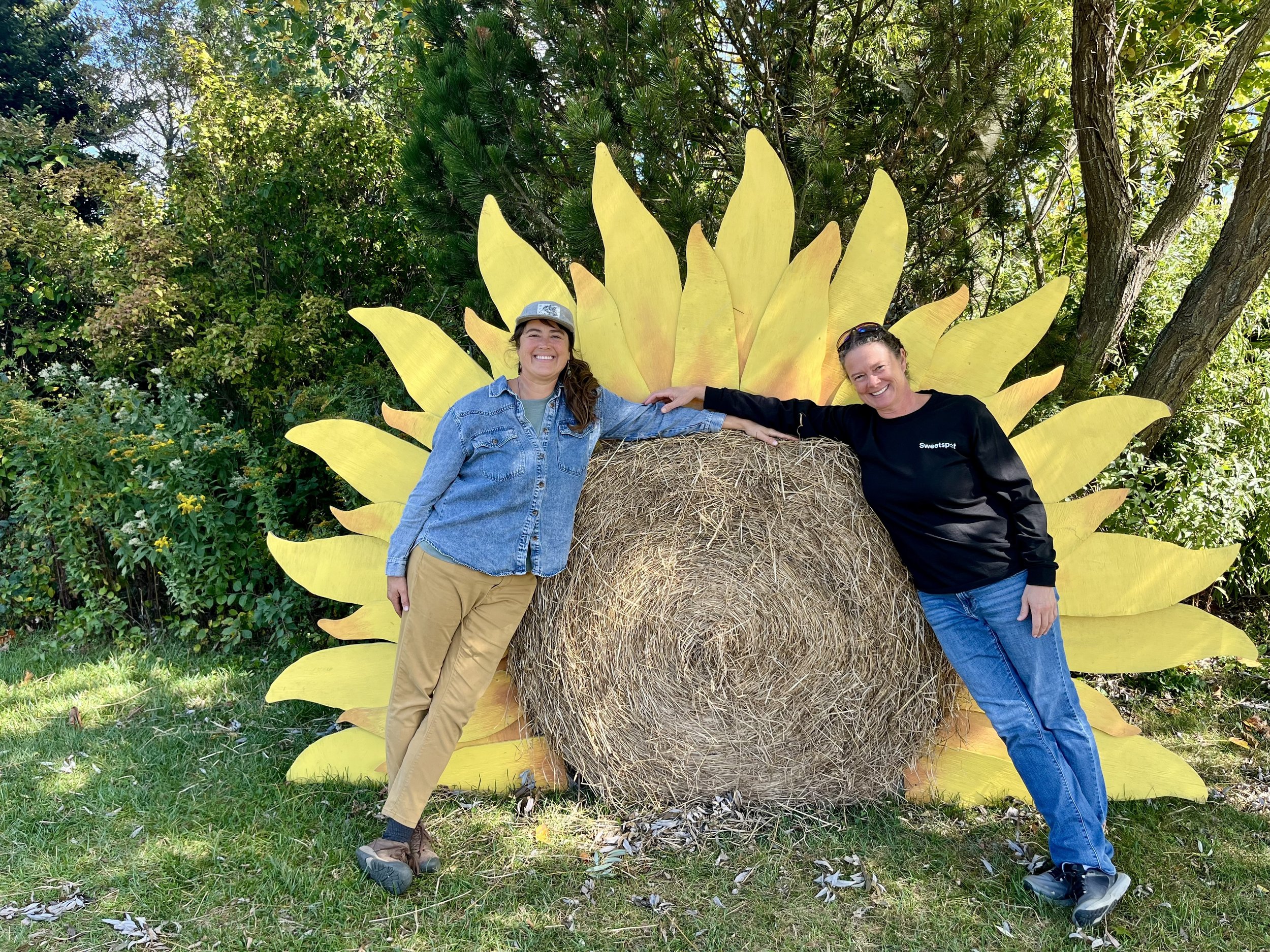
Andrea Lanctot
I’ve been lucky enough to call the North Coast my home for 21 years. I grew on a small homestead with my mom back east, where growing and eating healthy food was at the center of our universe. I studied at CalPoly Humboldt and focused on Appropriate Technology, creating tools, practices, and infrastructure that are well-matched to the local context—socially, economically, environmentally, and culturally. It emphasizes sustainability, accessibility, and community empowerment over scale or complexity. I went on to work on various small farms, permaculture homesteads, in natural building, with UC Cooperative Extension, and was able to work along side tribal food sovereignty projects from the mouth of the Klamath up to Karuk land in Somes Bar. It was on a farm in Orleans where I got to taste my first salmon from the mouth of the Klamath and had the opportunity to process, smoke, and can my own fish. And while I had grew up gardening and eating from the sea, I feel like that moment was transformative for me because it reconnected me to a deep sense of place and purpose. Each step—cleaning the fish, tending the fire, filling the jars—was an act of care, of relationship. It wasn’t just about food; it was about being part of a cycle, honoring the gift of the salmon, and taking responsibility for feeding my myself and preserving the harvest. In that moment, I understood food not as a commodity, but as a form of sovereignty, skill, and stewardship. I want nothing more than to empower people and help them see that when we take care of the land, water, and air and earth, it takes care of us. Whether it’s tending a garden, preserving salmon, or teaching a child to grow their own food, every action becomes part of a deeper relationship. Food is one of the most direct ways we experience that reciprocity. It’s how the land speaks to us, nourishes us, and invites us to belong.