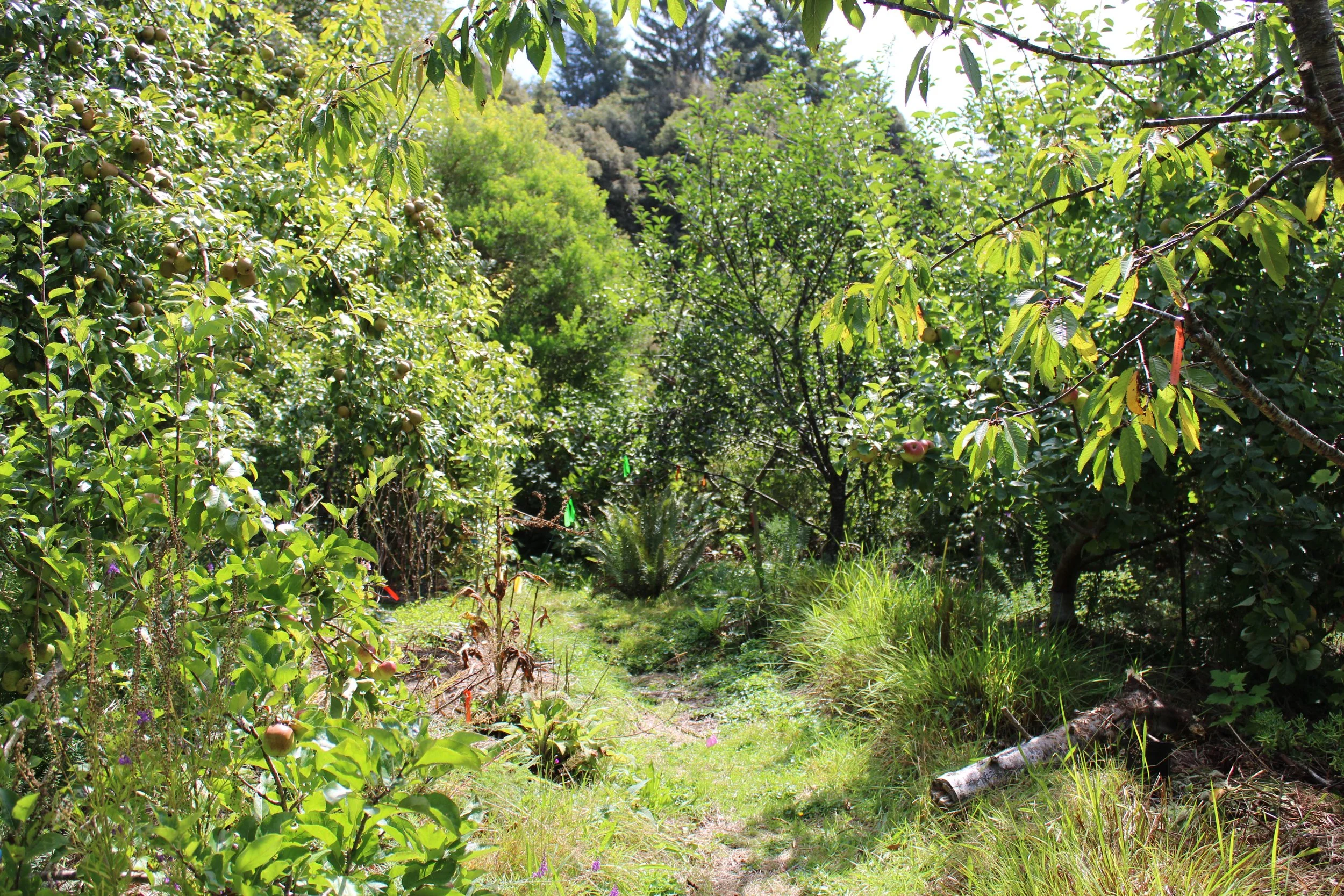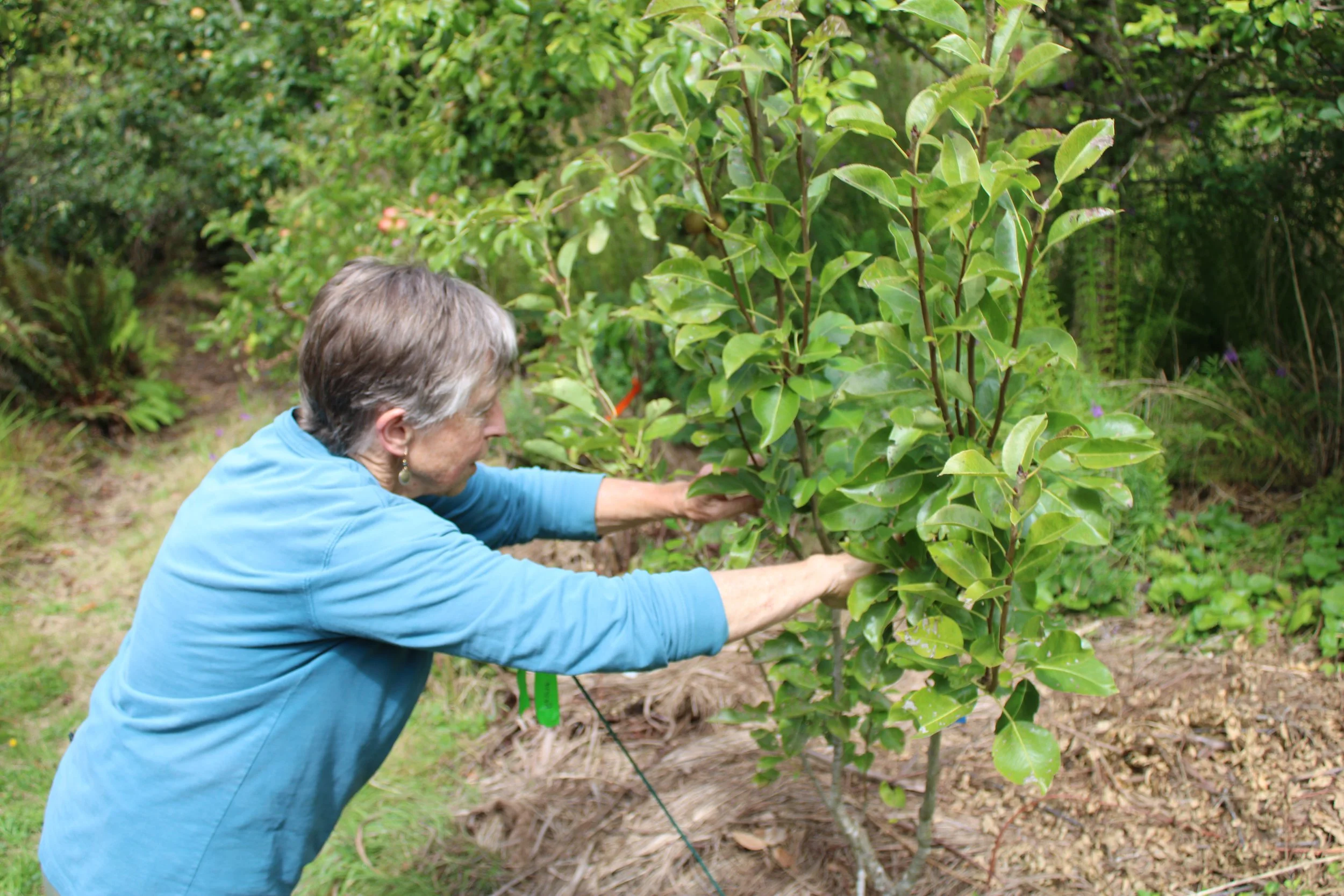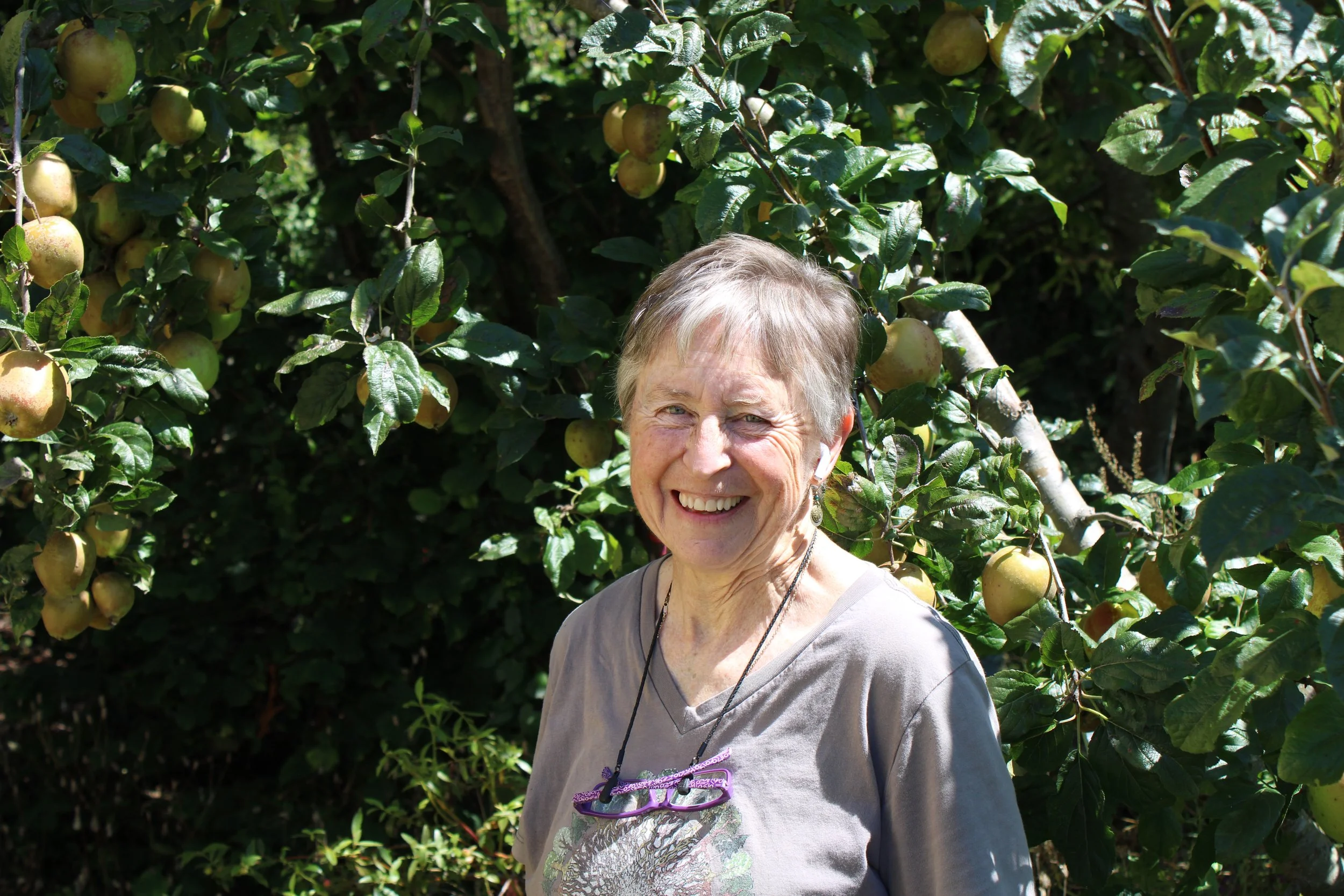
Smith River Organic Farm, stewarded by Terry Allaway, is a high-density, diverse orchard that produces food while working with the natural systems of the land.
Terry came into farming after working as a nurse for most of her career. Her interest in growing food developed through years of reading, gardening, and learning about permaculture through hands-on experimentation, and she eventually obtained her certification in permaculture design in 2016. She started farming in Smith River thirteen years ago, transforming the land into a food landscape.
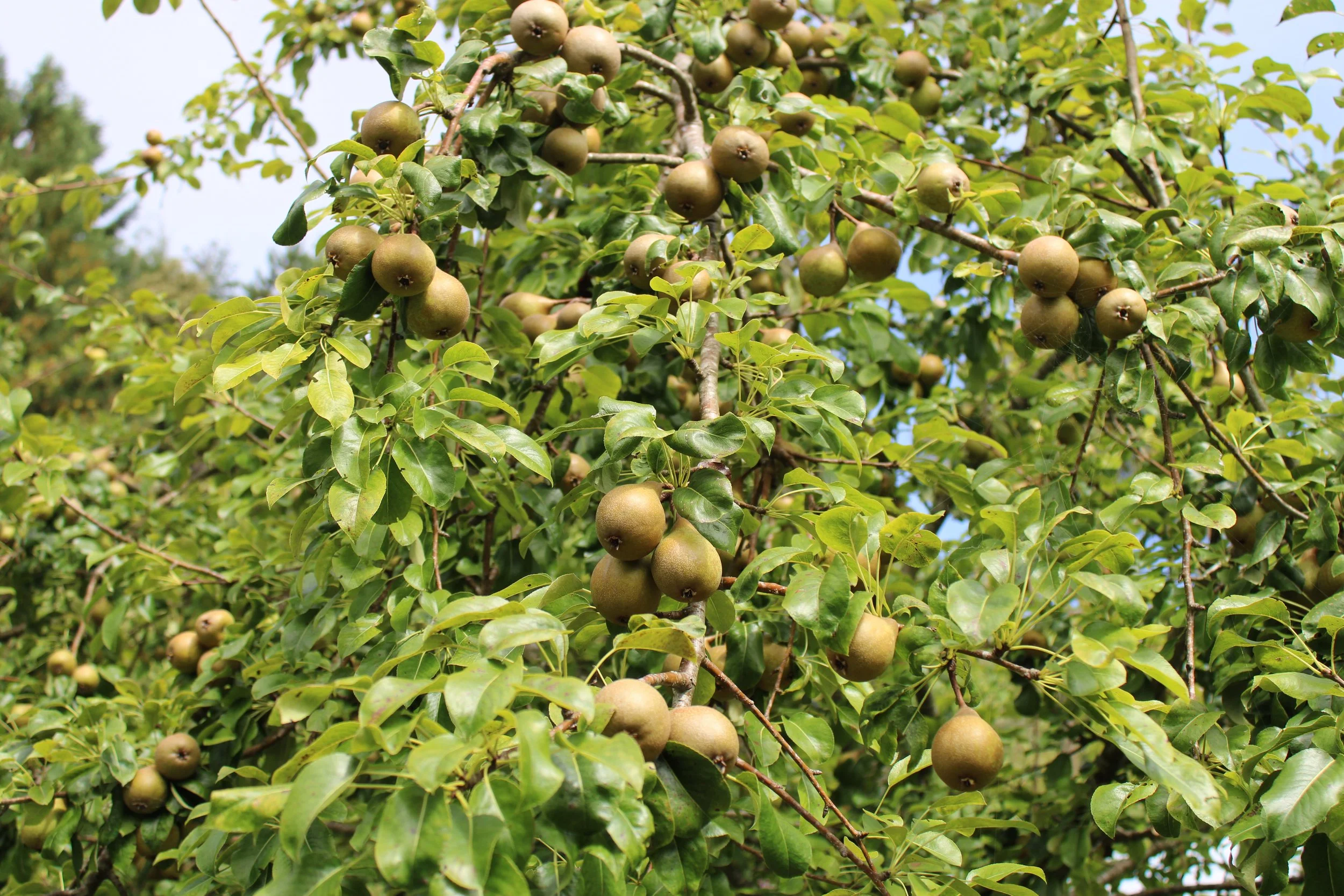
At the beginning, the property was little more than a grassy field with a few existing fruit trees, including several pear trees and a 90-year old walnut tree. The land came with challenges. It had previously been used as a log landing in the 1960s and contained rocky soil and industrial debris. Terry began rehabilitating the property by moving soil, creating slopes for drainage, and digging swales designed to collect and gradually filter rainwater into the soil around the trees. In the early years, she also encountered high pest pressure. As she increased plant diversity and created habitat for beneficial insects, she found that pest problems gradually declined. Today, flowers such as goldenrod and fireweed grow among fruit trees, while Terry works to establish a meadow of native grasses along the edge of the orchard.
Terry has been connected with the Community Food Council since its beginnings in 2010, when it was still part of the Family Resource Center of the Redwoods. She has also been a UC Master Gardener with the Humboldt and Del Norte Counties program for roughly 30 years and has served on the Community Food Council’s Steering Committee since its formation. Terry also provides guidance on development of the food hub as a Producer Advisory Committee member.
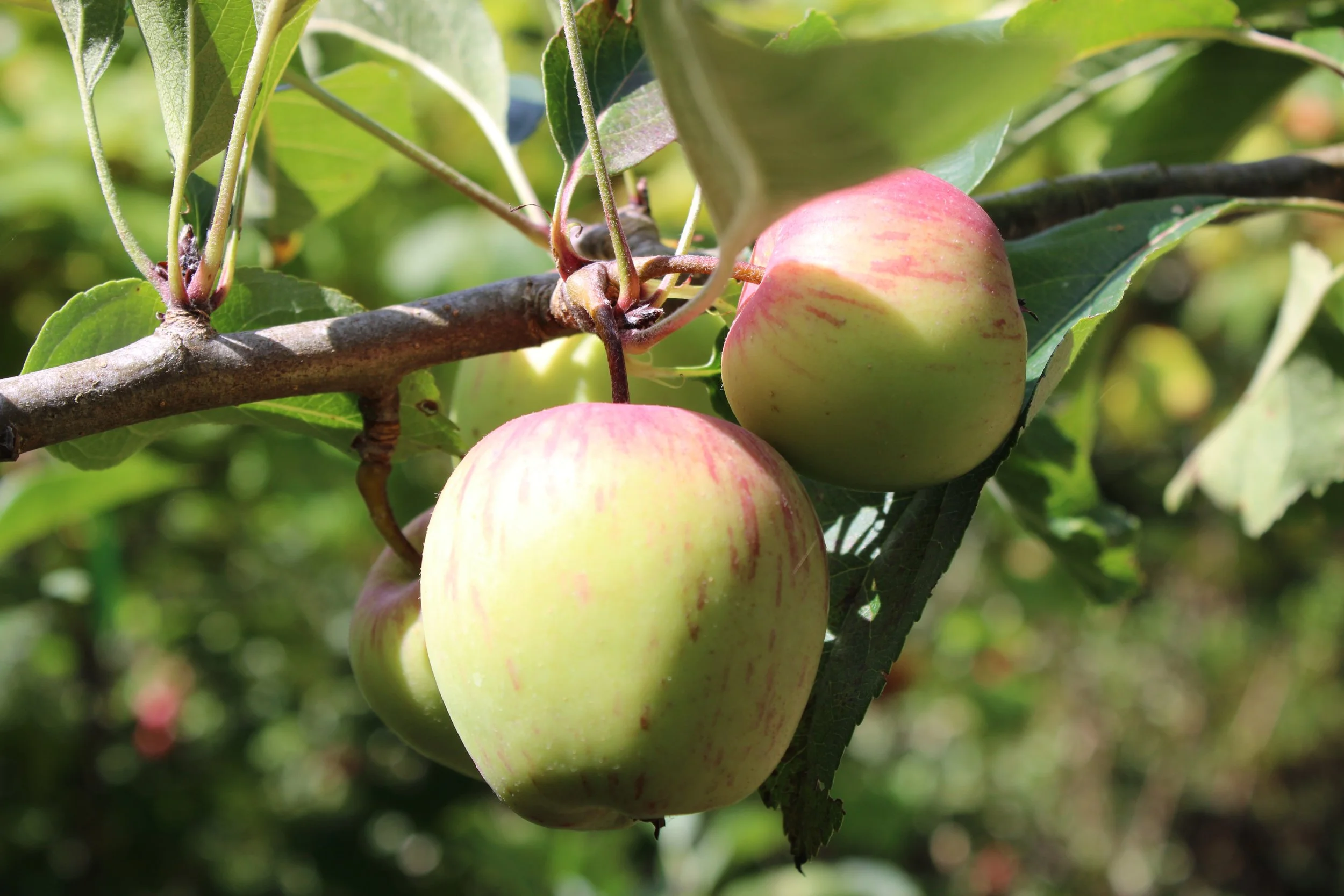
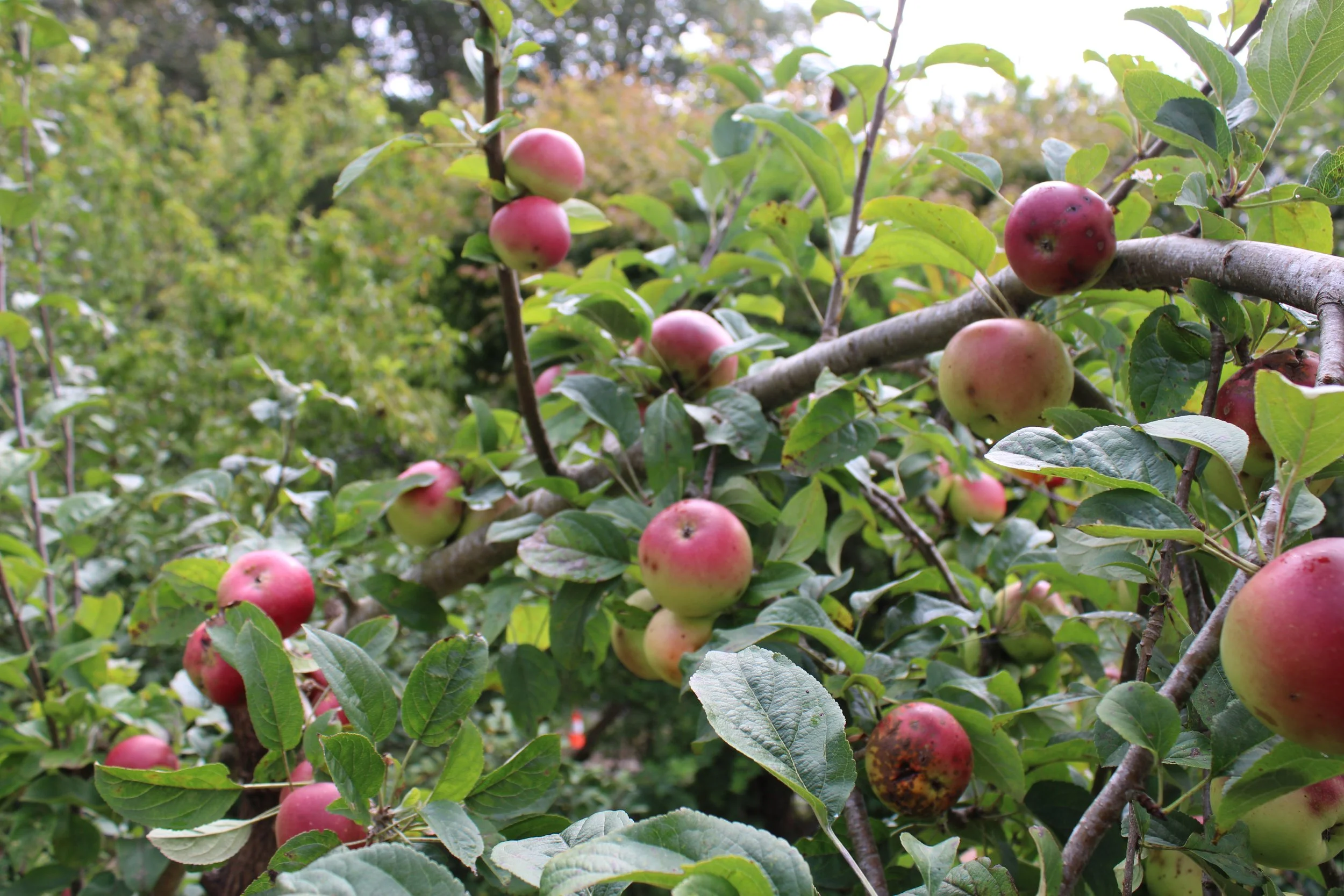
That long-standing connection is now especially relevant as the Community Food Council explores ways to expand shared infrastructure for local growers. This fall, the Food Council worked with Terry to pilot shared cold storage, storing 200 pounds of apples in our Barn Box cooler unit. Terry currently has no cold storage available on her farm, which limits her ability to sell her fruit beyond the relatively short growing season. The first apple variety in storage is Hudson’s Golden Gem, which develops its sweeter, pear-like flavor after several weeks in cold storage. The pilot allows our team to build systems for shared infrastructure, expand sales opportunities for local growers, and improve access to locally grown food throughout the winter.
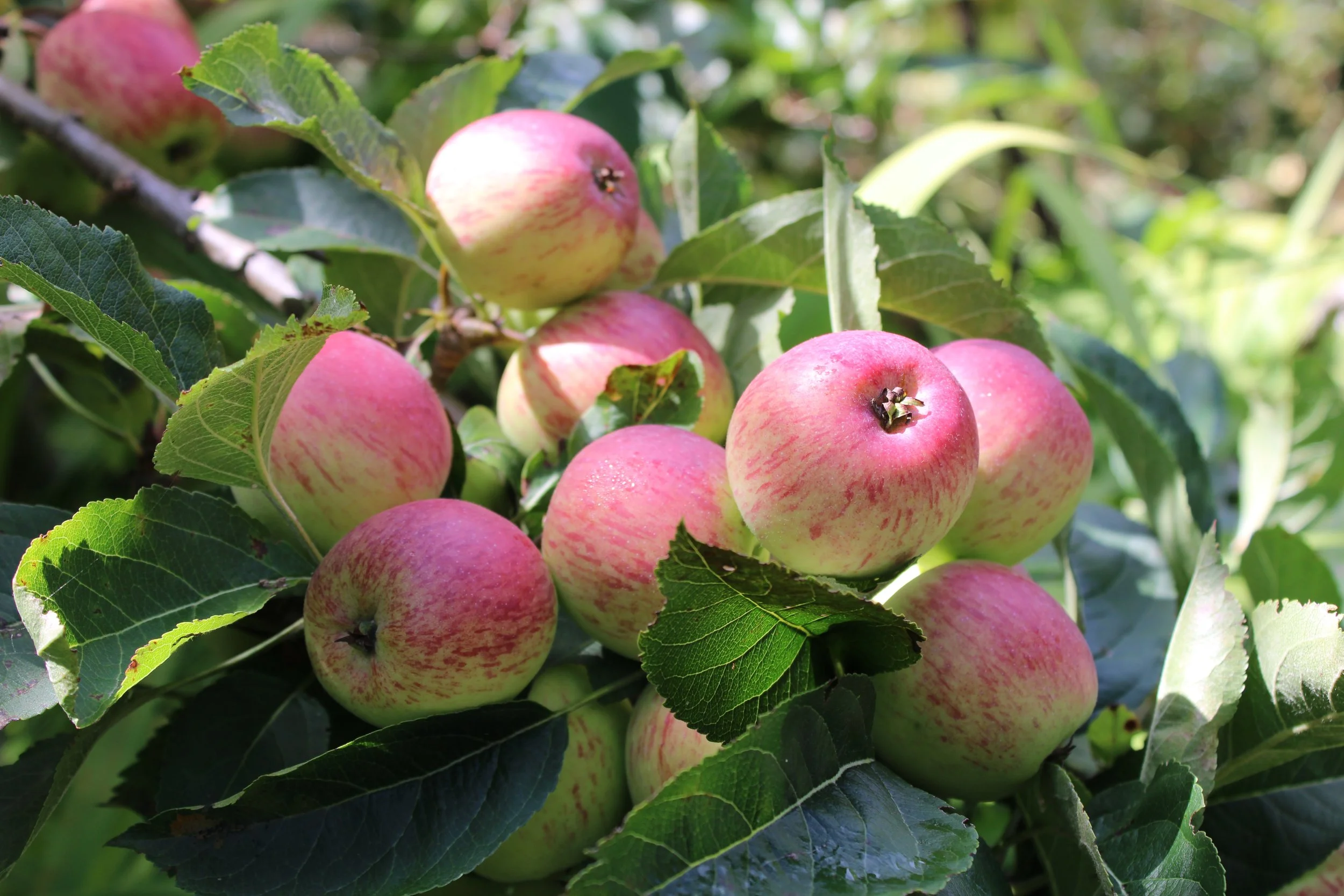
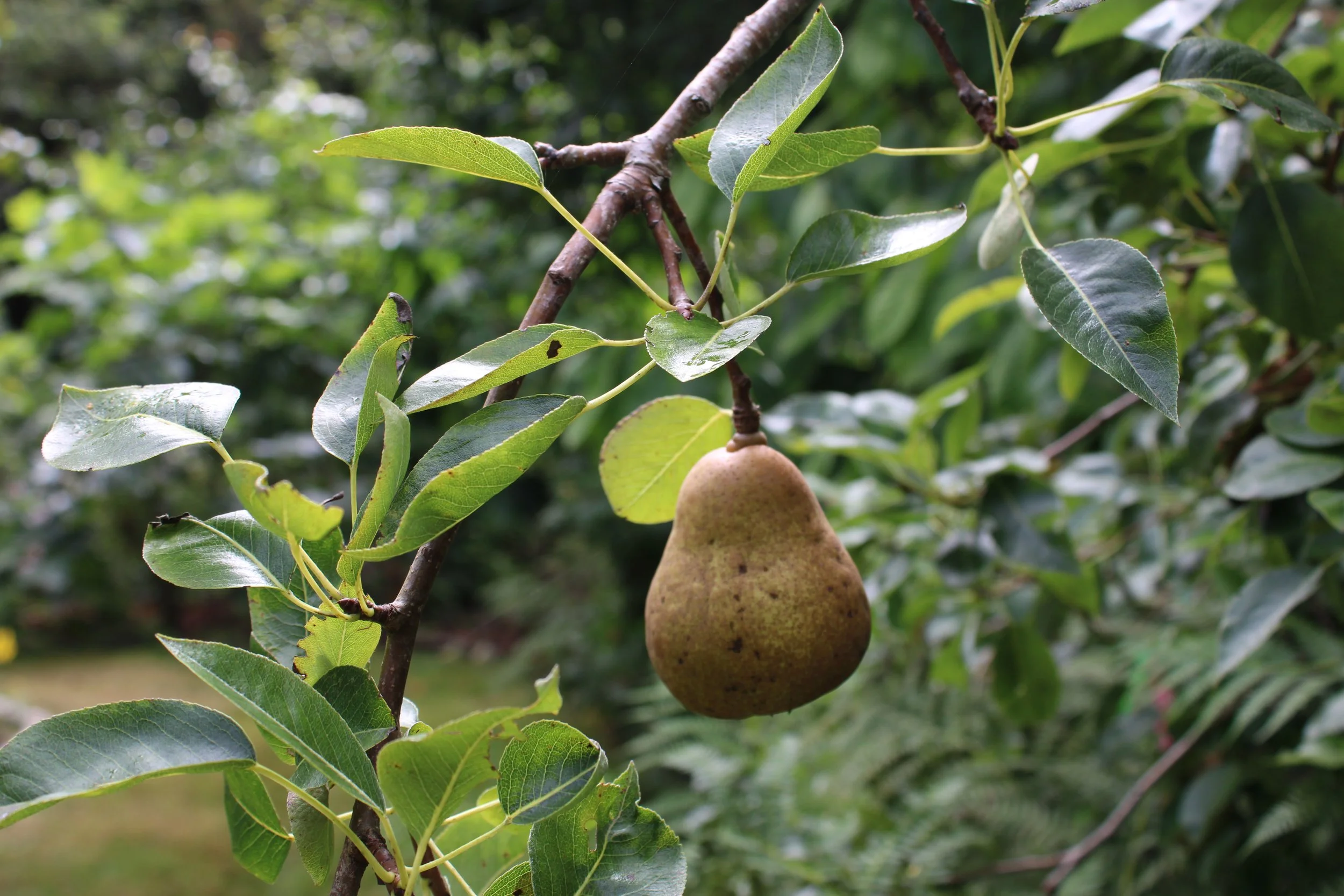
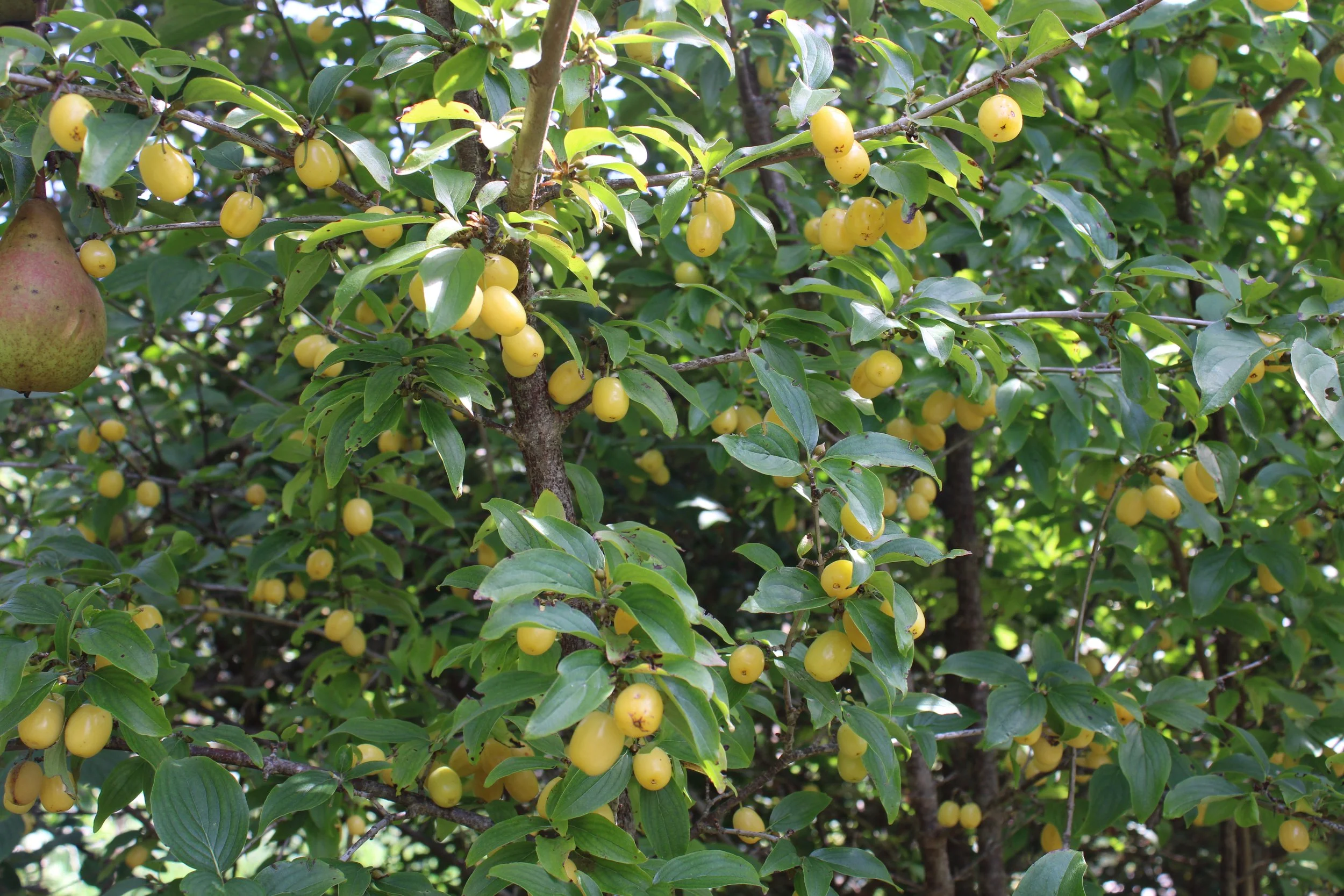
One of the most remarkable aspects of Smith River Organic Farm is the variety of fruit growing throughout the orchard. Terry grows more than 60 apple varieties, including red-fleshed varieties such as Rubaiyat, Venus, and Pink Pearl. Beyond apples, the orchard also includes Asian pears, perry pears, peaches, raspberries, Goumi berries, grapes, figs, walnuts, and a young pawpaw tree.
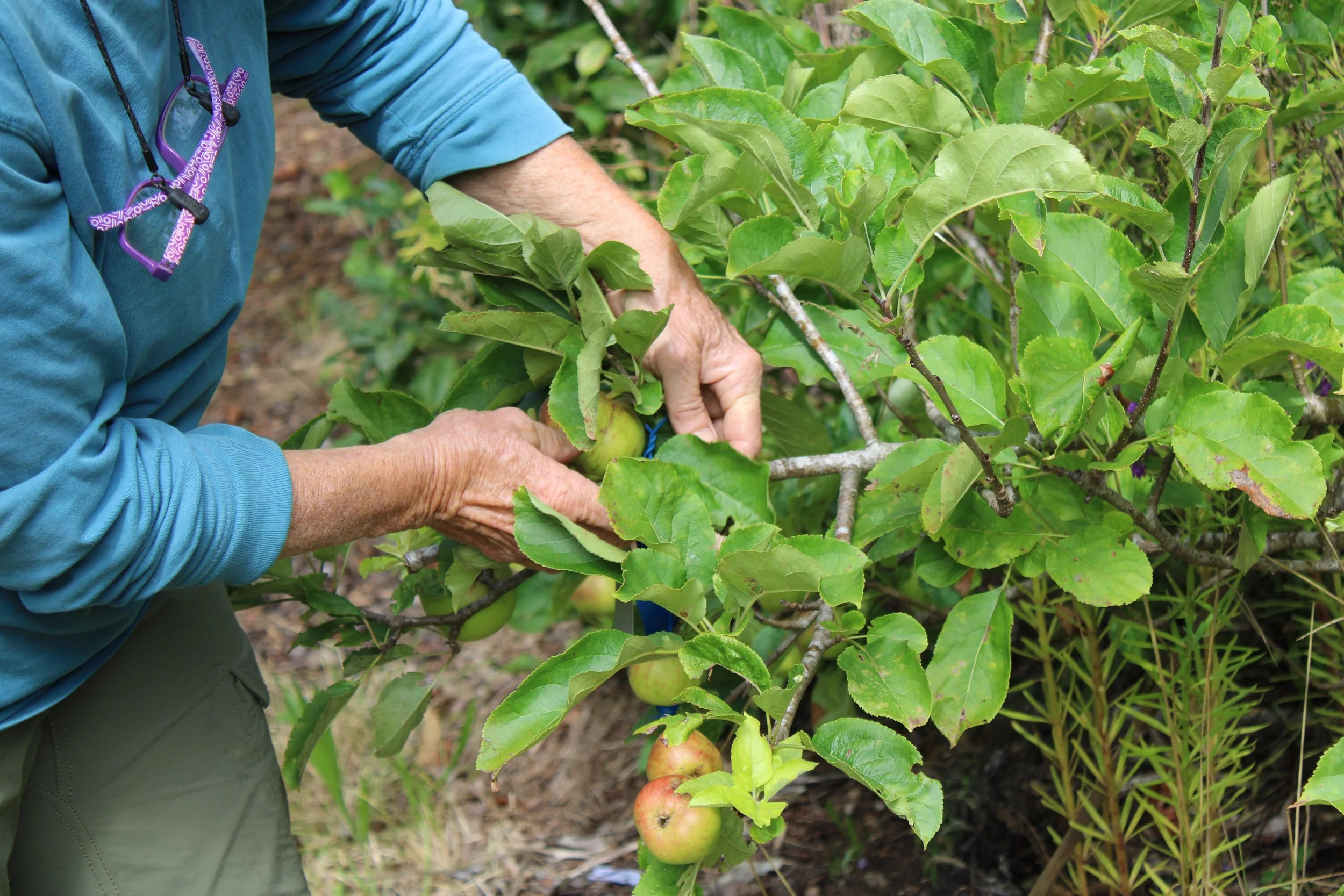
Much of Terry’s work with apples involves grafting, allowing her to grow specific varieties on existing rootstock. Rather than planting an apple seed and getting an unpredictable result, grafting allows a branch from a known variety to be attached to an established rootstock. Terry uses this technique to introduce varieties based on flavor, color, disease resistance, recommendations from other growers, and how well they adapt to local climate. Some trees produce multiple apple varieties from different branches, with tags and ribbons marking the different grafts.
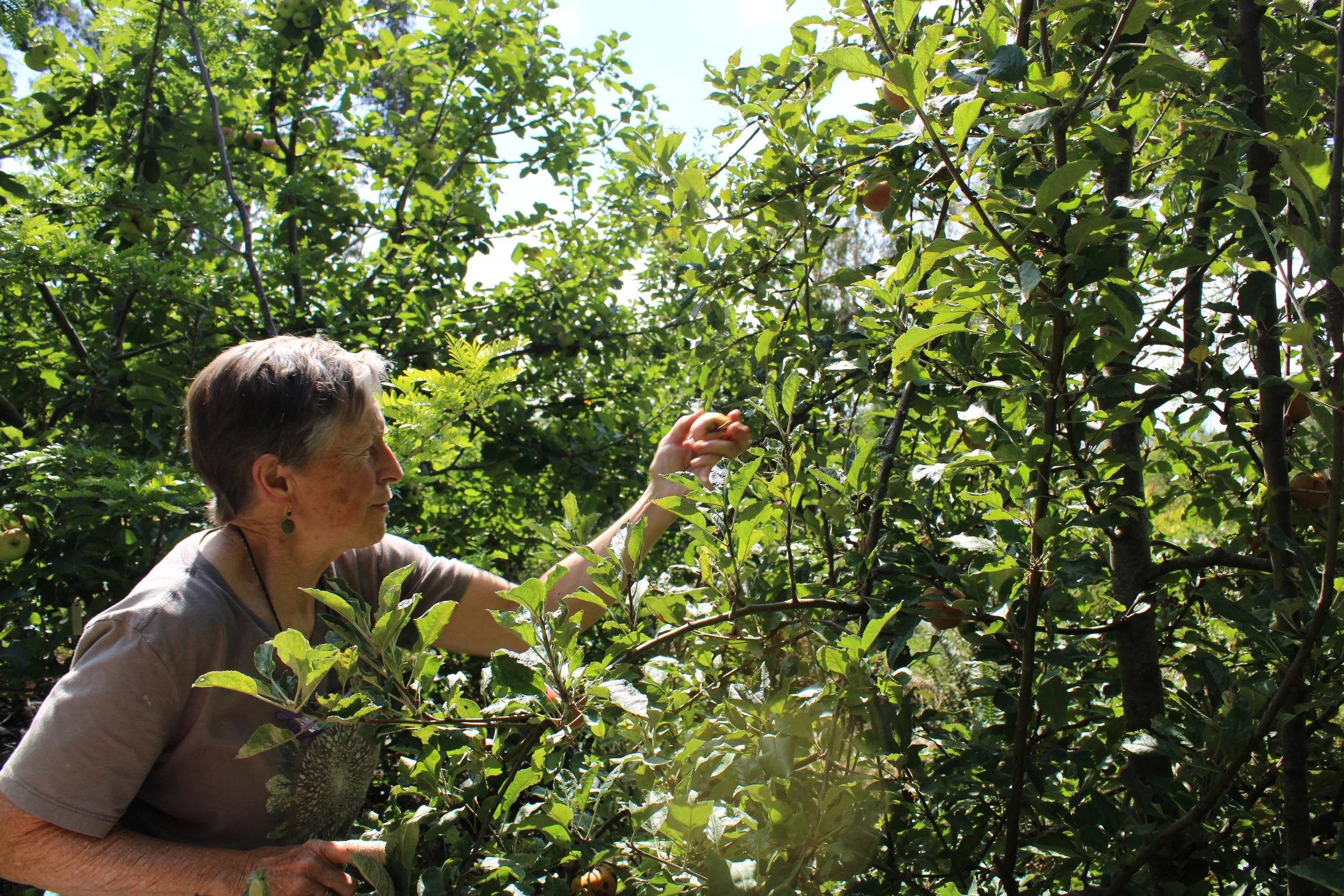
The orchard is also designed around high-density planting. With less than an acre of growing space, Terry carefully considers how trees and perennial plants can grow together without competing too heavily for sunlight, root space, or other resources. Gooseberries are planted beneath taller trees where they can benefit from shade, while nitrogen-fixing plants such as Goumi, sweet broom, and eleagnus are grown near fruit trees to improve soil health. Making use of naturally nitrogen-fixing shrubs allows terry to minimize fertilizer inputs for her mature trees. She also trains young trees to grow lower by tying their limbs in particular ways, making fruit easier to harvest and reducing the need for ladders. Terry is designing the orchard as an integrated system that should require less care as it matures.
The farm remains a place of experimentation. Terry views the orchard as a proof of concept for high-density fruit production using permaculture principles, with hopes of eventually expanding these ideas to a larger commercial scale. At this time, the farm is highly hands-on. Terry currently does the work herself without machinery, managing a diverse and densely planted space that can make harvesting labor intensive.
Alongside the orchard, Terry grows unique crops such as Greek giant beans, tree collards, chayote, wild rice, and garlic. She also sells fruit wholesale to the Del Norte Unified School District, providing locally grown fruit for students to enjoy at lunch and creating another connection between the farm and the local food system.
Sharing space with wildlife is an ever present challenge of growing at Smith River Organic Farm. Birds, squirrels, and bears are all attracted to the fruit growing throughout the property. Terry has added fencing to help protect some crops, but wildlife remains part of the farm’s ecosystem. She has also observed changes in growing conditions over the years, including warmer and wetter conditions, new diseases appearing on fruit, and increased bird pressure on berries. These observations continue to inform her approach and reinforce the importance of diversity and experimentation.
After more than a decade of work, Terry has transformed Smith River Organic Farm from a degraded grassy field to a vibrant, productive orchard. Through soil rehabilitation, water management, high-density planting, and cultivation of pollinator habitat, Terry has built a diverse orchard that continues to evolve. The farm provides food for the local community while also serving as a place for Terry to experiment, learn, and share her knowledge with other growers.
Through her work as a farmer, UC Master Gardener, and community educator, Terry is helping strengthen local knowledge of growing fruit and caring for the land. What began with a few fruit trees and a challenging piece of land is now a diverse and productive food forest, with many more years of growth still ahead.